
The first time you see Lenovo’s Project Crystal in person your brain does something strange. It doesn’t know where the screen ends and the world begins and that’s exactly the point.
Unveiled at MWC 2024 in Barcelona this concept laptop officially called the Lenovo ThinkBook Transparent Display Laptop isn’t just a gimmick. It’s a genuine attempt to rethink what a screen can be.
And after spending time with it I’m convinced that transparent displays are going to be a much bigger deal than most people realize.
What Exactly Is Project Crystal?
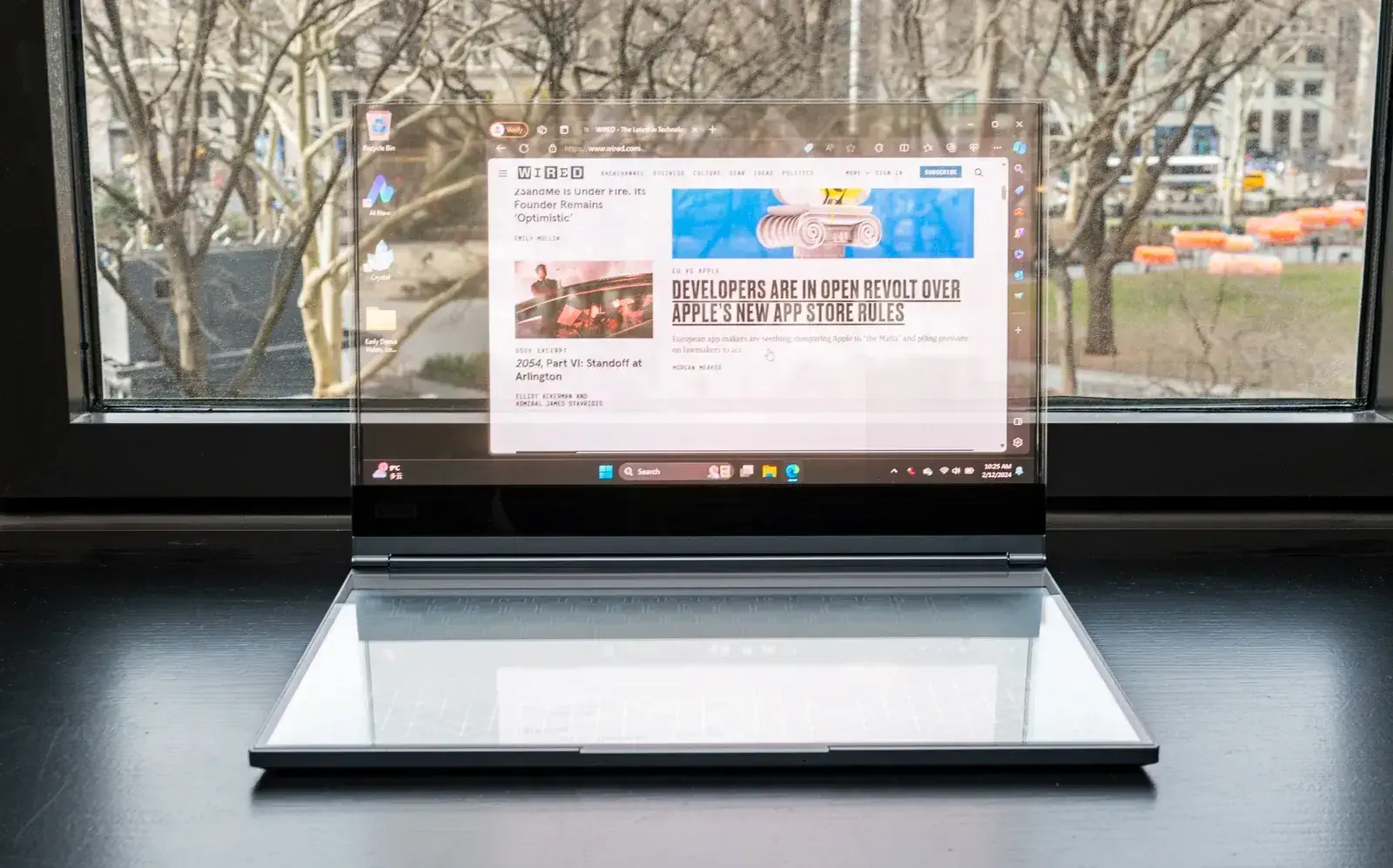
Project Crystal is a 17.3-inch concept laptop with a fully transparent MicroLED display. The screen isn’t tinted or frosted.
It’s genuinely see-through. You can look right through it at whatever is behind the laptop whether that’s a wall a window or another person sitting across from you.
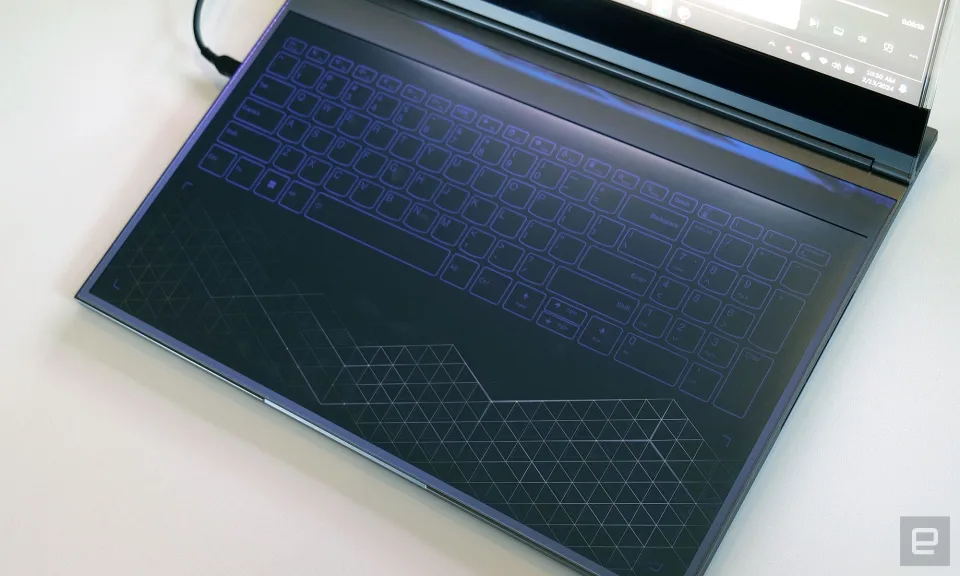
The keyboard area is also made of transparent glass material. The internal components of the laptop are hidden beneath a large touchscreen keyboard at the bottom of the device rather than being on display like some kind of look-inside gadget.
Lenovo is very clear that this isn’t a product you can buy. It’s a concept and technology demonstration. But as concepts go this one feels unusually close to something real.
How Does The Transparent Screen Actually Look?
Here’s the honest answer: it depends entirely on what’s behind it.
A dark background like a wooden desk or a grey wall makes the screen look surprisingly good. Text is readable and colors pop more than you’d expect. The whole thing has an almost cinematic quality. You feel like you’re watching content floating in mid-air.
A bright background like a sun-lit window is a different story. The ambient light bleeds through and washes out what’s on screen. It’s still watchable but you wouldn’t choose it.
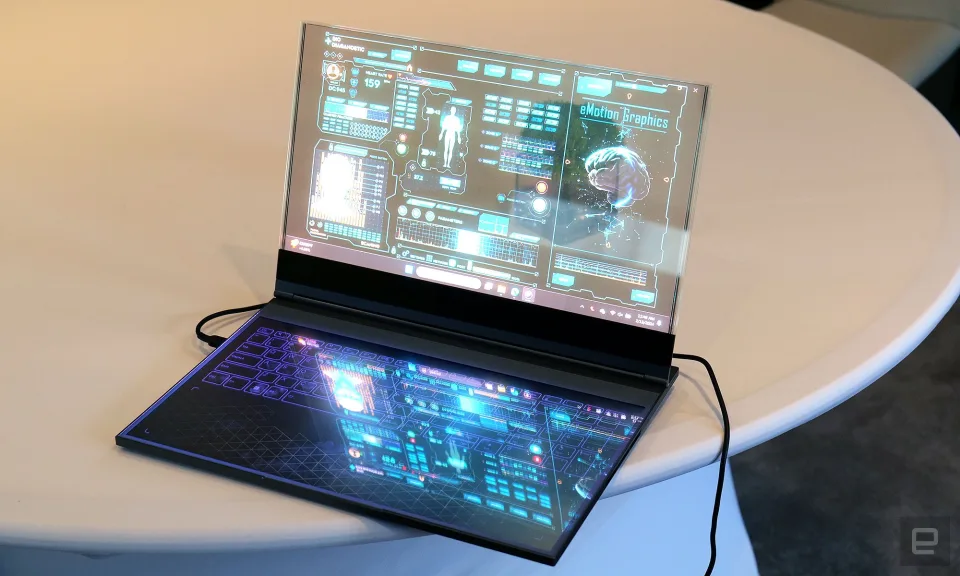
The panel reaches up to 1,000 nits nominal brightness with peaks reportedly hitting 3,000 nits which is brighter than Samsung’s latest Galaxy series according to Lenovo. That’s a meaningful number because transparency demands brightness to compensate for the light leaking in from behind.
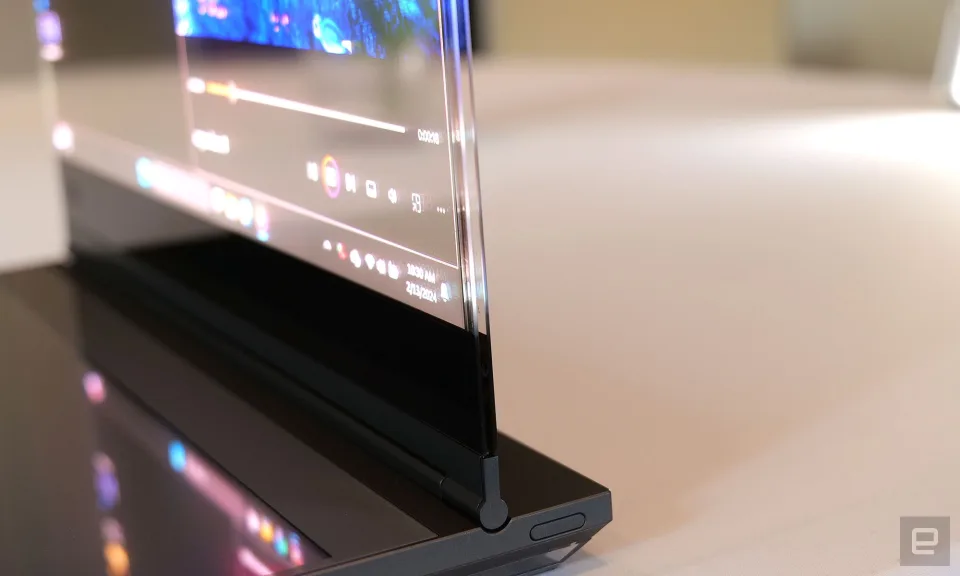
Despite being made of multiple layers the panel is remarkably thin. You’d be surprised how little it weighs just by looking at it.
The RearCamera and Augmented Reality — This Is Where It Gets Interesting
Lenovo didn’t stop at a transparent screen. They added a camera on the back of the laptop that reads the physical environment behind the display. Using Intel AI the laptop can overlay augmented reality graphics directly onto the transparent screen merging the virtual world with the real one in real time.
Lenovo gave a simple demo: if there are flowers visible through the screen the laptop might render an AR butterfly landing on them.
It sounds gimmicky when you describe it like that but in person the effect is genuinely striking. The boundary between the digital world and the physical one dissolves.
More practically Lenovo is exploring uses similar to Google Lens style object recognition. Point the camera at something in the real world and the screen surfaces information about it anchored to the thing you’re looking at rather than floating on a traditional display.
Who Would Actually Use Something Like This?
This is the question I kept coming back to and Lenovo has a thoughtful answer. Think about doctor’s offices. A doctor could flip the display so a patient sitting across the desk can read results or diagrams clearly without having to crane their neck around a monitor.
Hotel concierge desks classroom teaching and retail consultations are all places where a shared viewing experience matters without requiring two separate screens.
There’s also a subtle benefit in meetings. A transparent screen means you’re not hiding behind a black rectangle. People can see your face. The dynamic of the conversation shifts.
The Privacy Problem Nobody Should Ignore
Here’s the part that doesn’t come with an easy fix. A screen visible from both sides is a privacy problem by design.
In a home or open-plan office anyone walking behind you can see exactly what’s on your screen. That might be fine for a YouTube video. It’s a lot less fine for a bank statement a medical record or a private message.
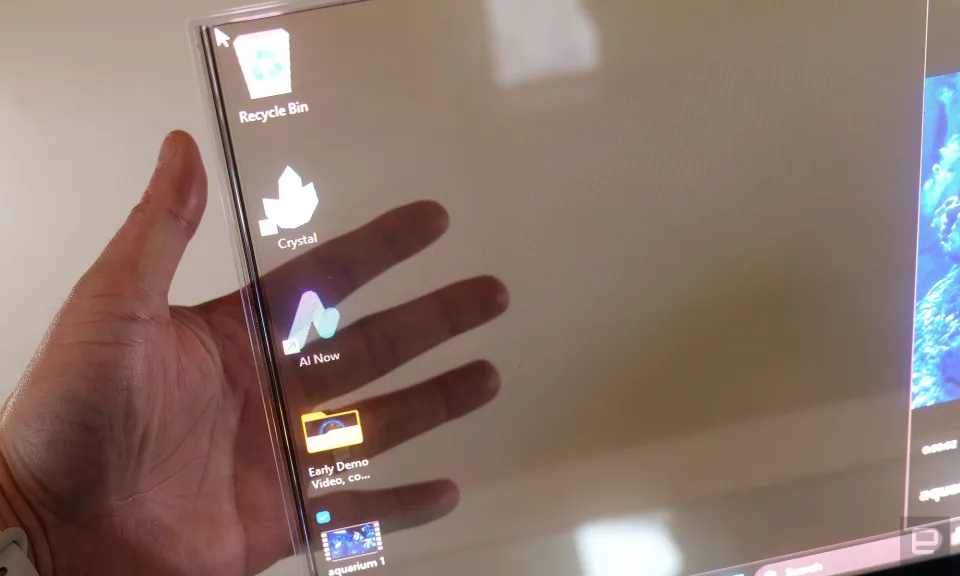
Lenovo is aware of this. They’re reportedly considering a contrast layer that could be activated to turn the display opaque on demand essentially making it switch between a transparent mode and a traditional laptop display with the press of a button.
If that works well in practice it would go a long way toward making this concept commercially viable.
Is Lenovo Project Crystal Coming to Market?
Not soon. Lenovo has said publicly that it’ll be a while before a transparent laptop reaches consumers and even that framing suggests they’re treating it as a serious long-term direction and not a dead end.
The bigger question is whether the market will want it when it does arrive. Transparent TVs have been available in limited form for years and they’ve remained a niche curiosity.
Laptops are more personal devices which could work either for or against transparent screens depending on how the use cases develop.
The Bottom Line
Project Crystal is one of the most genuinely imaginative concept laptops in years. The transparent MicroLED screen works better than it has any right to.
The AR angle has real legs if the software catches up and Lenovo’s use-case thinking is more grounded than you’d expect from a concept device.
Privacy and ambient light are real challenges but they’re solvable ones. This isn’t vapor. It’s a preview of where personal computing is going.