Quick answer
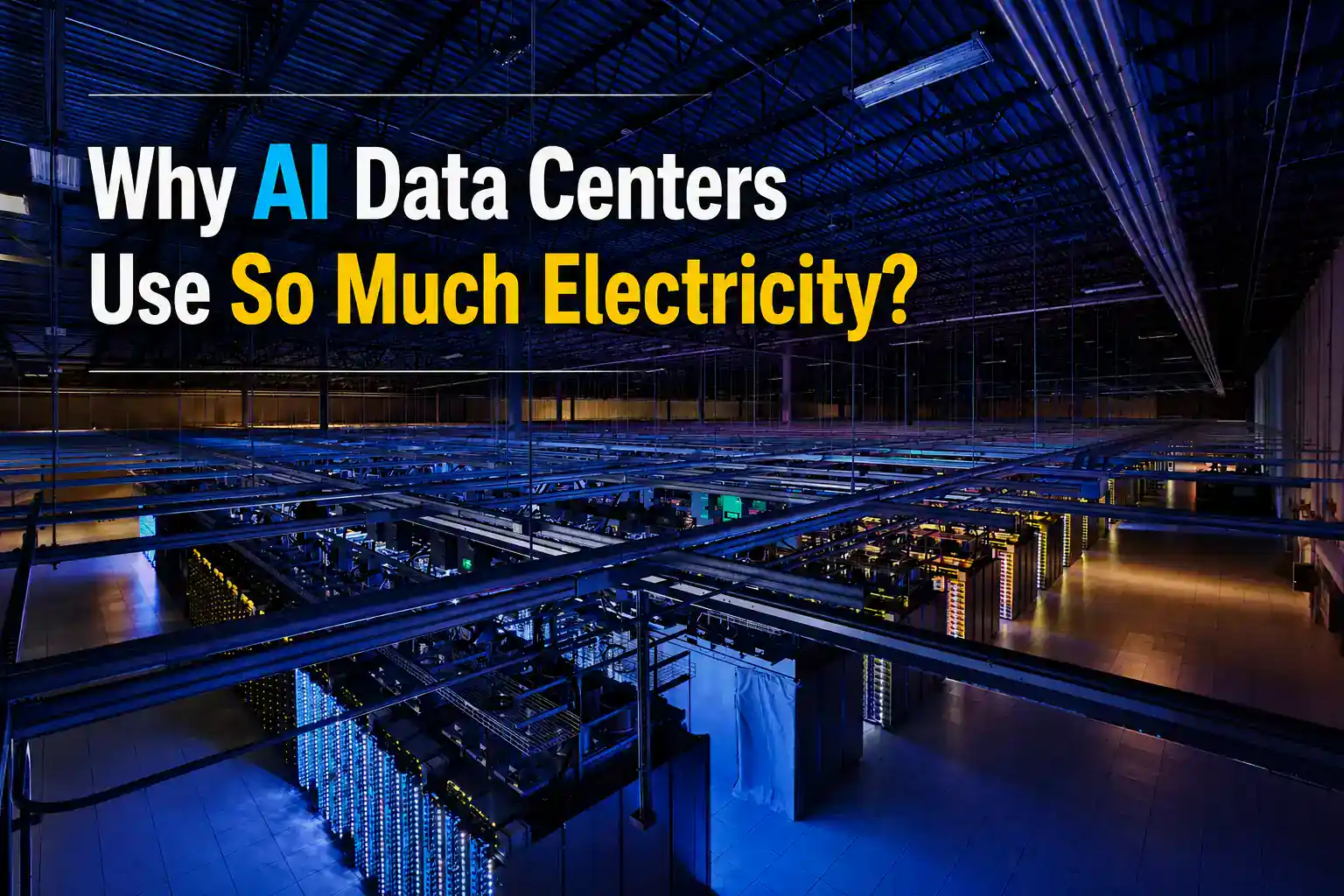
Global data centers used about 415 terawatt-hours of electricity in 2024, which is roughly 1.5% of all electricity on Earth.
AI is the main reason this number is rising fast. Special AI chips can use up to 1,000 watts each, and thousands of them run 24/7. On top of that, cooling these systems adds about 30% more energy use.
By 2030, data centers are expected to nearly double their electricity use to 945 TWh, growing at around 15% per year, faster than any other industry.
For example, ChatGPT alone handles about 2.5 billion queries every day.
Key Takeaways
- AI workloads require far more computing power than traditional web services.
- Specialized AI chips and GPUs consume significantly more electricity than standard servers.
- Cooling systems can account for a substantial share of a data center’s energy use.
- Global data center electricity consumption is expected to more than double by 2030.
- AI is now the biggest factor driving growth in data center power demand.
- Energy infrastructure is becoming one of the biggest challenges facing the AI industry.
What Is an AI Data Center?
An AI data center is a facility filled with servers designed specifically to train and run artificial intelligence models.
These facilities contain thousands of specialized processors, primarily GPUs, that perform trillions of calculations every second.
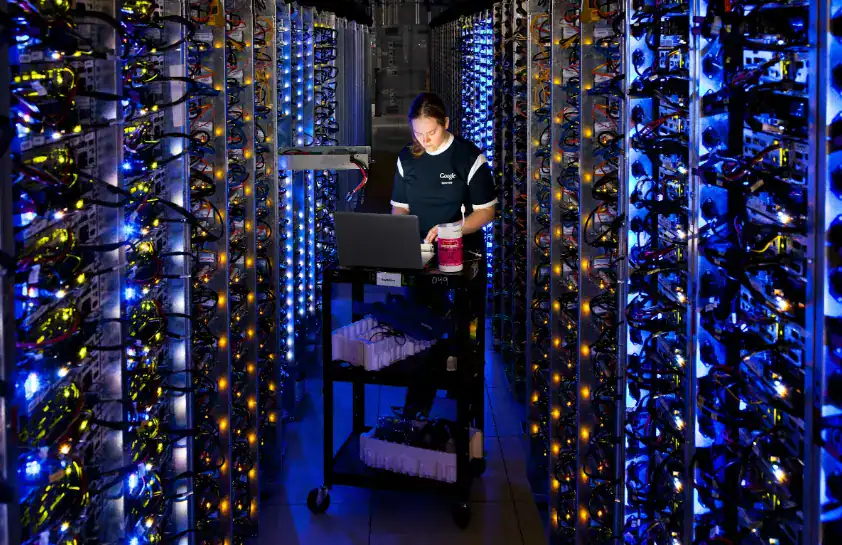
Companies such as Microsoft, Google, Amazon, Meta, and OpenAI rely on these centers to power services like chatbots, image generators, recommendation systems, search engines, and AI assistants.
While traditional data centers mainly store data, host websites, and run business applications, AI data centers focus on intensive mathematical computations that require far more electricity.
How Much Electricity Do Data Centers Use Globally?
In 2024, data centers in the United States used about 183 terawatt-hours of electricity, which is roughly 4–5% of the country’s total power use. To put that into perspective, it’s about the same amount of electricity a country like Pakistan (with around 240 million people) uses in a whole year.
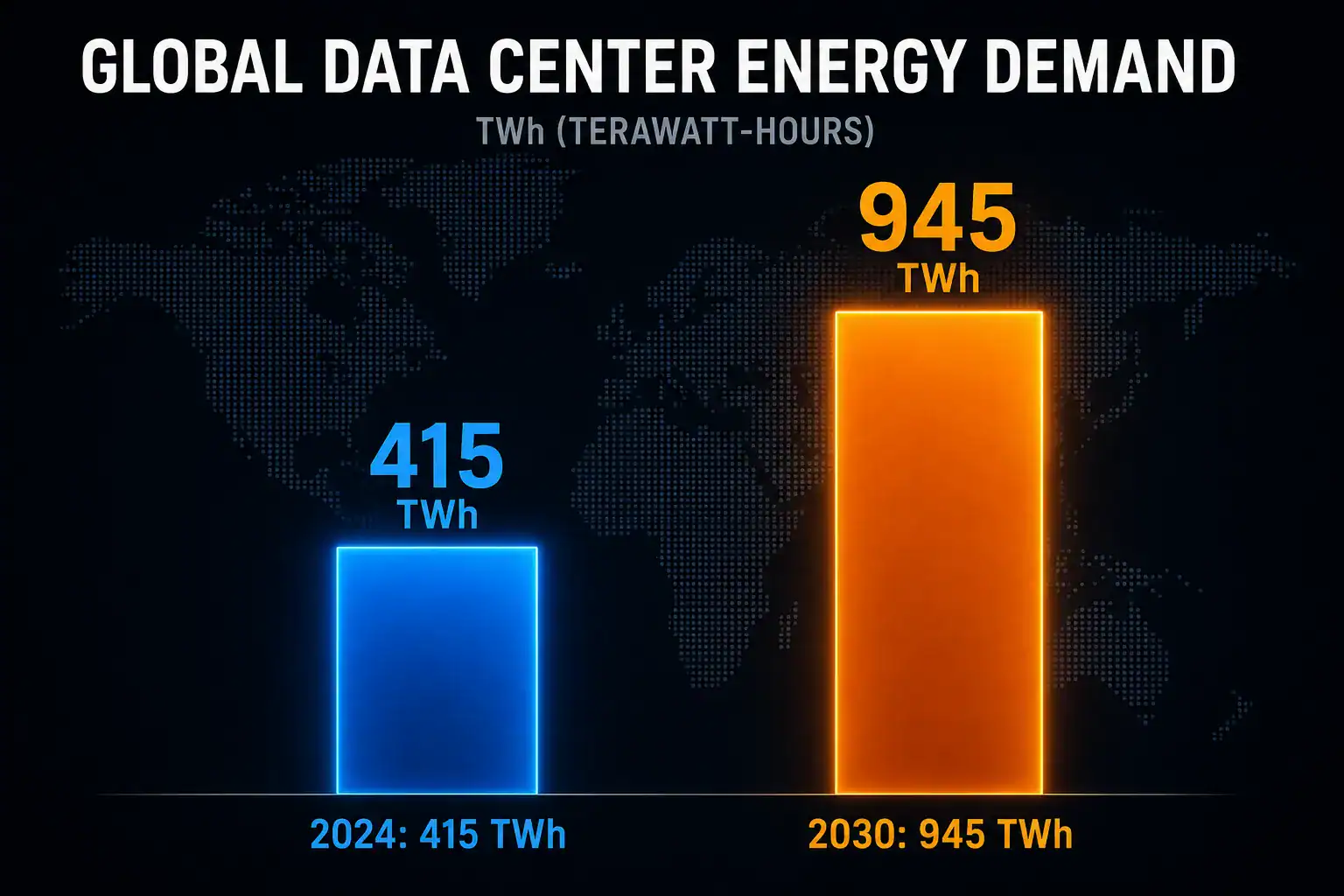
Globally, data centers used around 415 terawatt-hours in 2024, according to the International Energy Agency. That number is expected to rise sharply to about 945 terawatt-hours by 2030, which is roughly equal to the entire electricity use of Japan today.
This is one of the fastest-growing energy demands on the planet. Data center electricity use is increasing by about 15% every year, which is more than four times faster than all other sectors combined.
How Is an AI Data Center Different from a Regular One?
For most of the internet’s history, data centers were just big buildings full of regular computers. They stored files, ran websites, handled emails, and supported business software. Their electricity use grew slowly and steadily, without causing much concern.
AI changed that completely. Training and running large AI models needs very different hardware. Normal computers use CPUs, which are designed to handle many different types of tasks. AI systems rely more on GPUs, which were originally made for video game graphics.
Video games need millions of simple calculations happening at the same time. That same ability is exactly what AI needs when it learns from huge amounts of data.
The downside is that GPUs use much more electricity than CPUs. A typical server CPU uses about 150 to 250 watts, while an AI GPU can use 2 to 4 times more power. And modern AI data centers stack thousands of these GPUs together in dense racks from floor to ceiling, which dramatically increases total energy use.
Why Do AI Chips Use So Much Power?
Modern AI systems run on extremely powerful chips that consume a huge amount of electricity. For example, NVIDIA’s H100, one of the most widely used AI chips today, can use up to 700 watts on its own. That is about the same as a household iron running at full heat 24 hours a day, 7 days a week. NVIDIA’s newer B200 chip pushes that to around 1,000 watts per chip.
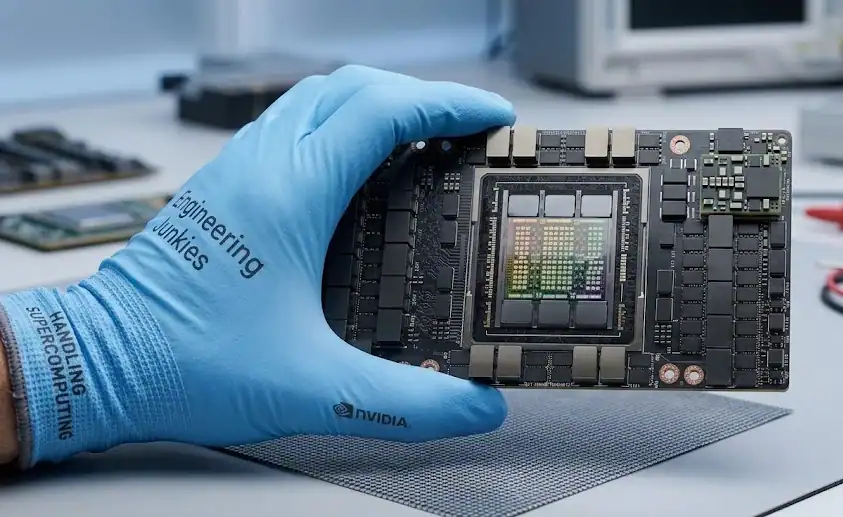
The power use adds up quickly. A single server cabinet with eight H100 chips uses about 5,600 watts just for the GPUs. Once you add the networking equipment, storage drives, and memory, the cabinet typically consumes 10,000 to 11,000 watts. A full row of these cabinets can draw 70,000 to 120,000 watts.
The latest AI systems are even more demanding. NVIDIA’s GB200 NVL72 packs 72 Blackwell chips into one rack and requires 120,000 to 140,000 watts. That is so much power in such a small space that traditional air cooling is no longer enough, so the system uses built-in liquid cooling.
Looking ahead, NVIDIA’s Rubin Ultra NVL576, expected in 2027, could use as much as 600,000 watts from a single rack. That is enough electricity to power a large apartment building.
These are not experimental machines in a lab. They are commercial systems that companies are installing in new AI data centers today.
Most people only talk about the electricity AI uses when it is running in data centers. But there is a bigger part of the story that usually gets ignored. It is the energy needed to build the chips in the first place.
Take a powerful chip like NVIDIA’s H100. Making just one of these can use around 700 kilowatt-hours of electricity during manufacturing. Most of this work happens in huge factories run by TSMC in Taiwan, the company that produces most of the world’s advanced AI chips.
In 2023, TSMC used about 23 terawatt-hours of electricity to run its factories. That is about the same as the yearly electricity use of a medium sized European country. And this was before the recent AI boom fully increased demand.
Water use is another serious issue. Chip production needs extremely pure water in very large amounts. In 2022, TSMC used around 170 million tonnes of water. This is especially important because Taiwan has faced major droughts in recent years, which puts pressure on both industry and local water supplies.
This hidden side of AI is often called embodied energy. It means all the resources used to make something before it is ever turned on.
Since chip manufacturing happens in different countries and is counted separately from data centers, it usually does not appear in AI energy reports. But it is very real and it adds a large part to the true environmental cost of AI systems.
What Uses More Energy: Training AI or Running It?
Training is the process of building an AI model. Developers feed huge amounts of text into the system and adjust hundreds of billions of internal settings until the model learns how to generate useful responses. This requires an enormous amount of computing power.
Training GPT-3 used an estimated 1,287 megawatt-hours. That is roughly the same as the yearly electricity use of 120 American homes. Training GPT-4 used somewhere between 27,000 and 50,000 megawatt-hours which is enough to power a small town for an entire year.
Inference is what happens every time you actually use an AI. Every ChatGPT message you send, every AI image you generate and every AI-powered search result is inference. It runs continuously 24 hours a day.
Here is what most people miss. Training only happens once. Inference never stops and that is where the real electricity goes. Research cited by the US Department of Energy estimates that 80 to 90 percent of all AI computing is inference not training.
OpenAI’s CEO has stated that the average ChatGPT request uses about 0.34 watt-hours. That is significantly more than a standard Google search. ChatGPT handles an estimated 2.5 billion queries every single day. At 0.34 watt-hours per query that adds up to more than 310 gigawatt-hours per year from just one product at one company.
How Much Energy Does Cooling an AI Data Center Take?
AI chips generate huge amounts of heat, and that heat must be removed to keep the systems running safely. As a result, cooling is the largest energy expense in a data center after the computing itself. In older or less efficient facilities, cooling can account for more than 30% of total electricity use.
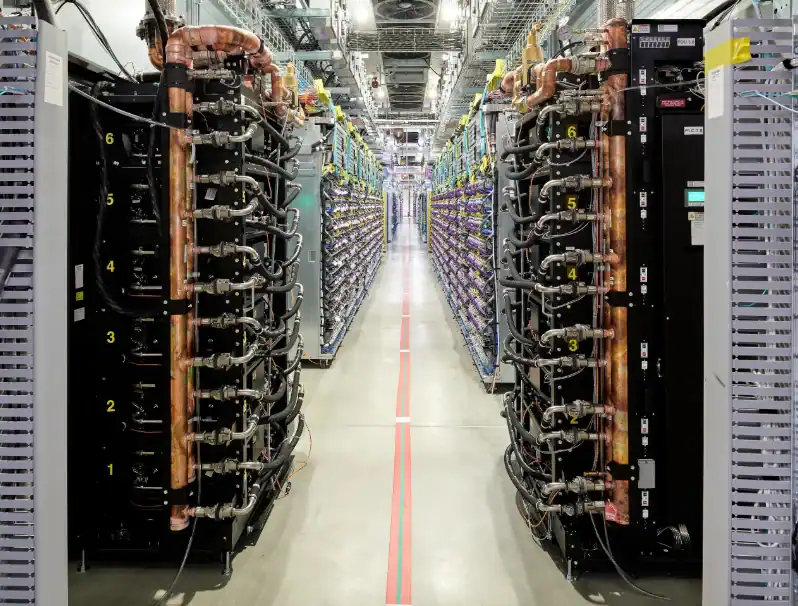
Data center efficiency is measured using a metric called Power Usage Effectiveness (PUE). A PUE of 1.0 means every watt of electricity goes directly to the computers. The global average is about 1.58, which means a large share of electricity is used for things other than computing, such as cooling, lighting, and power systems.
| Cooling Method | Typical PUE | Works Up To |
|---|---|---|
| Traditional air cooling | 1.4 to 1.6 | ~10,000 watts per rack |
| Liquid cooling with cold plates | 1.1 to 1.2 | ~100,000 watts per rack |
| Full immersion cooling | 1.03 to 1.05 | 100,000+ watts per rack |
For years, data centers relied on air cooling. When server racks used only 5,000 to 10,000 watts, air cooling worked well. But modern AI racks can consume 50,000 to 120,000 watts, creating far more heat than air can remove efficiently.
To solve this problem, many companies are turning to immersion cooling, where entire servers are submerged in a special non-conductive liquid. This method can reduce cooling energy use by up to 90%.
In 2025, immersion-cooled data center capacity matched traditional air-cooled capacity, and it is expected to double air-cooled capacity by the end of 2026.
How Much Water Do AI Data Centers Consume?
Electricity is not the only resource AI data centers use in large amounts. Cooling the equipment also requires a lot of water. On average, a data center needs about 2 liters of water for every kilowatt-hour of electricity it uses. The largest facilities can consume up to 5 million gallons of water every day.
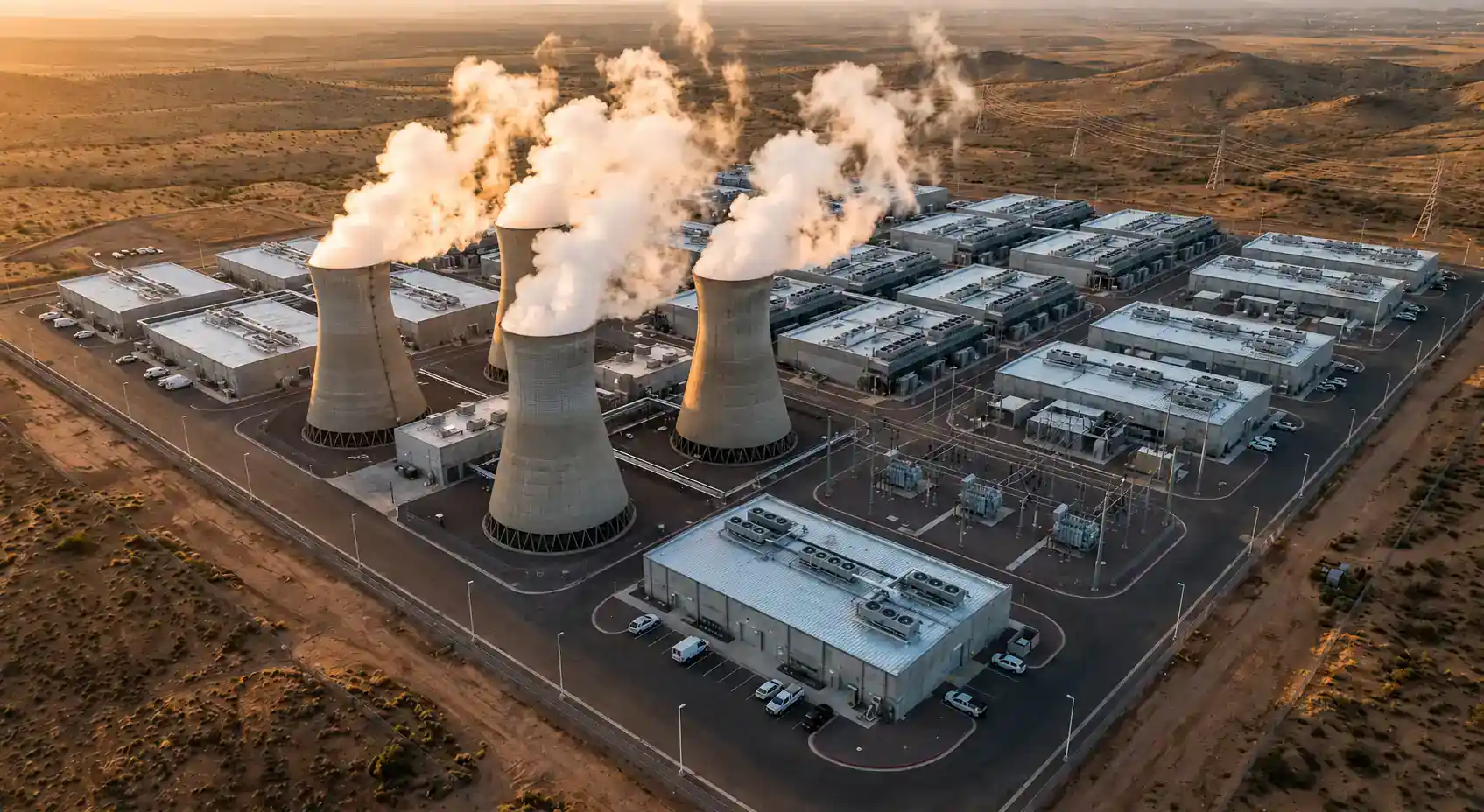
A June 2026 report from the United Nations University found that data centers worldwide used an estimated 448 terawatt-hours of electricity in 2025, which is more electricity than Saudi Arabia uses in a year. The report also projects that the total water footprint of AI data centers could reach 9.3 trillion liters by 2030.
Water use is becoming a growing concern because many new data centers are being built in areas that already face water shortages. According to a Bloomberg investigation, about two-thirds of data centers built since 2022 are located in water-stressed regions.
A study by the University of Houston found that data centers in Texas alone could use up to 399 billion gallons of water per year by 2030. This highlights the growing challenge of balancing AI’s rapid expansion with local water supplies.
What Else Besides GPUs Drives the Energy Bill?
A common misunderstanding is that GPUs use most of the electricity in AI systems. In reality, they account for only about 40% of total power use during peak operation. According to research from Epoch AI, a large part of the energy cost comes from everything supporting the chips, not just the chips themselves.
| Power Category | What It Covers | Approximate Share |
|---|---|---|
| GPUs | The AI chips themselves | 40% |
| Server overhead | CPUs, memory, interconnects, power supply losses | 22% |
| Facility IT equipment | Networking switches, storage, inter-server connections | 8% |
| Cooling and infrastructure | Cooling systems, lighting, power conversion losses | 30% |
For every 1 watt used by AI chips, about 2.4 watts of electricity must be delivered from the power grid to run the full system. That extra energy goes into things like cooling, power conversion, and facility infrastructure.
Another big factor is reliability. AI data centers cannot afford interruptions. A power outage during a multi-week AI training run can ruin the entire process and cost millions of dollars, because all progress can be lost or corrupted.
To prevent this, every facility runs backup diesel generators and multiple layers of redundant power systems. Even when they are not actively producing power, these systems still consume energy in standby mode, adding to the total electricity footprint.
How Does Energy Use Scale Across a Full AI Facility?
At an even larger scale, Meta is planning its Hyperion project in Louisiana, which is expected to require at least 5 gigawatts of power. That is about three times the electricity use of the entire city of New Orleans. Microsoft is also building the Fairwater data center, which is projected to use more electricity than the city of Los Angeles.
In Northern Virginia, which has the highest concentration of data centers in the world, total installed capacity has already reached around 4,000 megawatts. Because demand is so high, new facilities there now face power grid connection delays of five to ten years.
How are AI Data Centers Straining Local Power Grids?
In Ireland, data centers already consume more than 21 percent of the country’s total metered electricity more than all urban households combined. Ireland’s national grid operator has paused approvals for new data centers around Dublin until 2028.
In the United States, the PJM electricity market saw data centers add an estimated $9.3 billion in costs to the 2025–2026 capacity market, translating to average monthly bill increases of around $18 for residents in western Maryland and $16 in Ohio.
A Carnegie Mellon University study estimates that data centers and cryptocurrency mining combined could raise average US electricity bills by 8 percent by 2030, potentially exceeding 25 percent in northern Virginia.
What Energy Sources Power AI Data Centers?
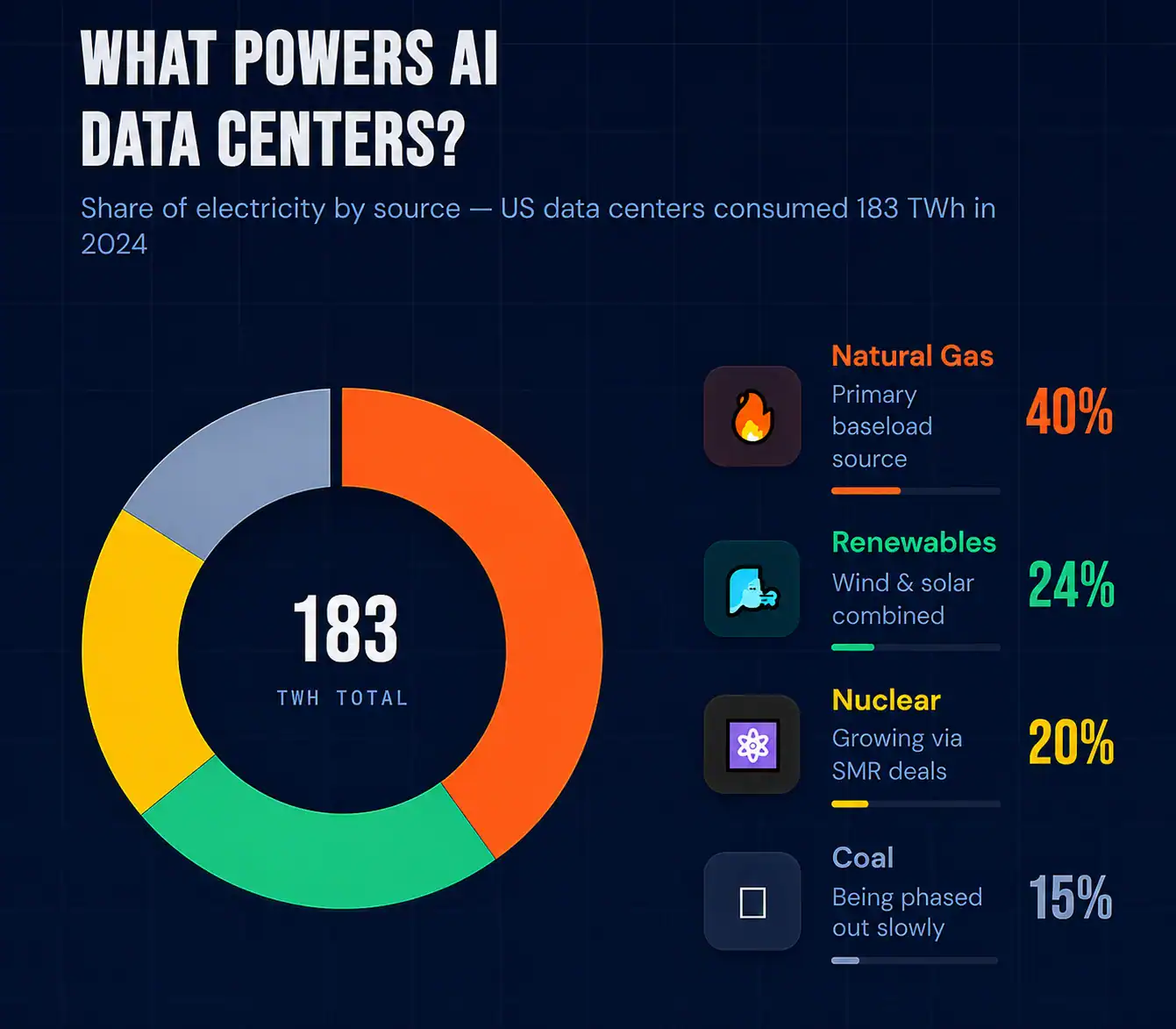
| Energy Source | Share of US Data Center Electricity (2024) |
|---|---|
| Natural gas | Over 40% |
| Renewable energy (wind and solar) | ~24% |
| Nuclear power | ~20% |
| Coal | ~15% |
Big Tech companies have become the largest corporate buyers of renewable energy in the world, signing about 43% of all global clean energy purchase agreements in 2024.
But renewable energy has a limit: solar only works in the daytime, and wind only works when the wind is blowing. Meanwhile, AI data centers need power 24 hours a day, 7 days a week, without interruption.
Because of this gap, tech companies are increasingly turning to nuclear power for steady, around-the-clock electricity.
In September 2024, Microsoft signed a 20-year deal with Constellation Energy to restart Unit 1 of the Three Mile Island nuclear plant in Pennsylvania.
Google has partnered with Kairos Power to develop multiple small modular nuclear reactors. Amazon has committed to supporting 5 gigawatts of new small modular reactor projects.
Meta has requested 1 to 4 gigawatts of new nuclear power capacity, while Oracle plans to build a data center powered by three small modular reactors.
Are Big Tech Climate Promises Real?
Companies like Google, Microsoft, and Amazon have made big promises to run on 100% clean energy or reach net-zero emissions by 2030. These goals are real, but the reality behind them is more complicated.
Most of the time, data centers are not powered by clean energy every hour of the day. Instead, companies often buy renewable energy credits from solar or wind projects in other places and count that toward their targets. That means their actual data centers can still be running on gas or coal power at certain times, depending on what is available on the grid.
The results show how hard this is becoming. Between 2020 and 2023, Microsoft’s emissions increased by about 30%, while Google’s rose by about 48%. Both companies say the main reason is the rapid growth of AI and expanding data centers.
Google is trying a stricter method called 24/7 clean energy matching, which aims to match clean electricity with usage in real time and in the same location. By 2024, Google said it had reached about 64% of this goal. Most other big tech companies have not adopted this approach yet.
Overall, the climate commitments are genuine, but actually meeting them is becoming more difficult—especially as AI demand keeps growing.
Are AI Data Centers Becoming More Efficient?
Yes, real improvements are happening.
Google reported in 2025 that between May 2024 and May 2025, it reduced the median energy used per Gemini prompt by 33×, and cut the carbon footprint per prompt by 44×.
AI models themselves are also becoming more efficient. A newer design approach called Mixture of Experts only activates a small portion of a model’s full processing power for each question, instead of running everything at once. This saves a lot of energy while still producing strong results.
On the hardware side, research from Epoch AI estimates that the most advanced AI chips are becoming about 40% more energy-efficient every year, showing steady progress in reducing energy use even as AI demand grows.
| Efficiency Gain | Reality Check |
|---|---|
| Google cut per-prompt energy by 33x in one year | Total AI energy use still rose sharply in the same period |
| New chips are 40% more efficient per year | Chip deployments are growing faster than that |
| Immersion cooling cuts cooling energy by up to 90% | Cooling is only 30% of total facility energy |
DeepSeek Made AI More Efficient — So Why Is Energy Still Rising?
In 2025, DeepSeek released an AI model that matched top U.S. models but reportedly cost only about $6 million to train. Similar models from companies like OpenAI can cost hundreds of millions. So people naturally asked: if AI is becoming cheaper and more efficient, why isn’t electricity use going down?
The answer is simple: efficiency usually leads to more usage, not less.
When something becomes cheaper, people use it more. Companies don’t slow down spending. They scale up. They add more AI tools, build more products, and run more systems. So total AI usage keeps growing.
The International Energy Agency (IEA) says that even with more efficient AI, data center electricity use is still expected to rise sharply, reaching around 950 terawatt-hours by 2030. Cheaper AI doesn’t reduce energy use. It increases demand for it.
This is known as the Jevons paradox. It means that when technology becomes more efficient, total consumption can actually go up instead of down.
A Comparison you Probably Have Not Seen
To understand how fast data centers are growing, it helps to compare them with entire countries.
Pakistan, a country of about 240 million people, uses roughly 130 terawatt-hours of electricity per year. In 2024, data centers in the United States alone used about 183 terawatt-hours, which is already more than Pakistan’s entire national grid.
If growth continues at the International Energy Agency’s projected rate of 15% per year, US data centers could reach levels by 2030 that exceed the current electricity use of India, which is about 1,900 terawatt-hours per year. In simple terms, computing systems in one country could soon need the same amount of power as an entire subcontinent.
This creates a serious planning challenge. Power grid operators usually plan new capacity 10 to 15 years in advance. But AI data center demand is growing in cycles of just 2 to 3 years.
This gap is not just a technical issue. It is a timing problem. Demand is rising much faster than the power grid can be expanded. Even improvements in efficiency cannot fully fix this mismatch.
This slow adjustment between supply and demand is already putting pressure on electricity grids. In regions with many data centers, electricity prices for everyday households are starting to rise because of this imbalance.
What Can Actually Be Done About This?
One of the most effective steps governments can take is requiring clear reporting.
The European Union already requires large data centers to disclose their energy use, water consumption, and renewable energy share. Several US states, including California, Michigan, and Iowa, have similar rules.
This does not directly reduce energy use, but it makes the industry more transparent. With better data, governments can plan power grids, water systems, and regulations more effectively.
Some states are also reducing automatic tax breaks for data centers, instead linking them to goals like lower water use and cleaner energy.
For individuals, the impact is limited. Using AI a bit more or less will not change whether new data centers are built.
What people can do is stay informed about local projects, follow how utilities approve new power connections, and support policies that demand transparency. Publishing clear energy and water data from companies is not a complete solution, but it is one of the most practical ways to improve accountability.
The Full Picture
Today, data centers use about 1.5% of global electricity. That is still small compared to industries like manufacturing, transport, and buildings, which use much more energy overall.
But data centers are different in one important way. Their energy use is still growing fast, while most other sectors are trying to reduce theirs.
The International Energy Agency projects that data centers could reach about 1% of global carbon dioxide emissions by 2030, even as many other industries lower their emissions.
The main issue is that AI is expanding faster than efficiency improvements can keep up. When technology becomes more efficient, it usually also becomes cheaper and easier to use. That leads to more usage overall.
Economists call this the Jevons paradox. It is happening in real time with AI. The big question now is whether the benefits of AI are worth the growing energy cost, something the world is still trying to fully understand.
Frequently Asked Questions: Hydrogen vs Electric Cars
⌄
⌄
⌄
⌄
⌄
⌄
⌄
Sources: IEA · PRC · Epoch · MIT · Brookings · CMU · Bloomberg
Written by
Engineering Junkies Team
We are a team of engineers, researchers and technology writers who love breaking down complex topics into clear and honest content. Every article we publish is built on real research and honest writing.
You can reach us through our Contact Us page.