Engineering Junkies
  • HOME
  • TECHNOLOGY
  • NEWS
  • GADGETS
  • TRANSPORT
  • SCIENCE
  • LIFESTYLE
No Result
View All Result
  • HOME
  • TECHNOLOGY
  • NEWS
  • GADGETS
  • TRANSPORT
  • SCIENCE
  • LIFESTYLE
No Result
View All Result
Engineering Junkies
No Result
View All Result
Home ENERGY

Samsung New Solid-State Battery Power 600-Mile EVs in Minutes

Engineering Junkies by Engineering Junkies
30/04/2026
in ENERGY
Share on FacebookShare on Twitter

Samsung's New Solid state EV Battery offers 600-Mile Charge in 9 Minutes and 20-Year Lifespan

Samsung Moves Closer to EVs with 600-Mile Range and Ultra-Fast Charging

I’ve been covering the EV space for years, and every once in a while something comes along that actually feels like it could change the game. Samsung SDI’s new all-solid-state battery is one of those moments.

Announced at SNE Battery Day 2024 in Seoul, this isn’t just another prototype. Samsung has a fully operational pilot production line running right now, with the first test cells already in the hands of major EV makers.

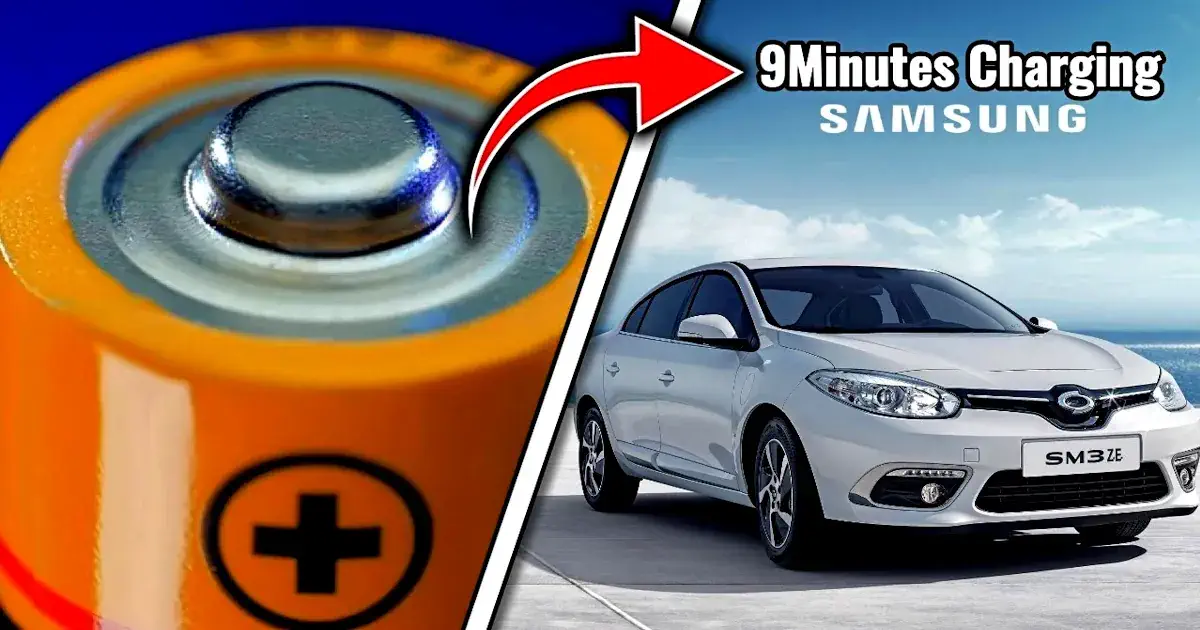
The promise? Electric vehicles that can drive roughly 600 miles (about 965–1,000 km), recharge in around 9 minutes, and keep going strong for up to 20 years. If you’re tired of range anxiety and long charging stops, this is the kind of leap we’ve all been waiting for.

Samsung’s Solid-State Battery: A Closer Look

At the SNE Battery Day 2024 expo in Seoul, South Korea, Samsung revealed its fully operational pilot production line for solid-state EV batteries, a key step towards mass production in 2027.

As Samsung SDI explained, “We built a pilot line last year to mass-produce all-solid-state batteries by 2027.”

Samsung has already delivered initial batches of the new batteries to EV manufacturers for testing.

A model of Samsung's all-solid-state EV battery cell
A model of Samsung’s all-solid-state EV battery cell

Enhanced Performance and Range

Let’s keep it simple and focus on what Samsung is actually claiming. The company says its new solid-state battery could give electric cars up to 600 miles of range on a single charge, so most long trips would only need one or two quick stops.

Charging could take around 9 minutes, likely from about 10–80%, which is the usual range used to protect battery life. It could also last up to 20 years, or close to a million miles.

Samsung SDI Vice President Koh Joo-young presents the company's battery development strategy
Samsung SDI Vice President Koh Joo-young presents the company’s battery development strategy. (Photo by Reporter Lee Min-jo)

Another big upgrade is energy density, reaching 500 Wh/kg, which is almost double what current batteries offer. This means the battery can be smaller and lighter, giving cars more space inside and even better handling.

Overall, these batteries could make EVs go farther, charge faster, and last much longer. They are also expected to be safer than today’s lithium-ion batteries.

However, because they are expensive to produce, they will first appear in high-end electric cars. Samsung is also working on high-nickel batteries as a more affordable option for premium vehicles.

Higher energy density and faster charging

Samsung’s oxide solid-state battery technology delivers an energy density of about 500 Wh/kg, which is almost double the 270 Wh/kg found in most current EV batteries.

In simple terms, this could mean electric vehicles driving nearly twice as far on a single charge.

Samsung's solid-state batteries have an energy density of 500 Wh/kg, twice as high as most EV batteries
Samsung’s solid-state batteries have an energy density of 500 Wh/kg, twice as high as most EV batteries

The company also claims a 9-minute charging time, which likely refers to charging from around 10–20% up to 80%, not a full 0–100% charge. This is normal in the industry, since charging slows down after 80% to protect battery life and keep it stable over time.

Samsung SDI stated: “We will not only match the price in the popular and entry-level segments, but also mass produce products that can be rapidly charged in 9 minutes by 2026.”

Why Solid-State Batteries Are a Huge Upgrade

Traditional lithium-ion batteries use liquid electrolytes. Samsung’s oxide-based solid-state design replaces that with a solid electrolyte. The result:

  • Safer — dramatically lower risk of fires or thermal runaway.
  • More efficient — less wasted space, so packs are smaller and lighter.
  • Longer lasting — better cycle life and stability over time.
  • Improved performance: Higher energy density for extended range
  • Faster charging: Significantly reduced charging times
  • Enhanced safety: Reduced risk of fires and explosions
  • Smaller and lighter: More efficient use of vehicle space

Samsung SDI Vice President Koh Joo-young has been front and center on this strategy. The company is clear that these batteries will first land in “super premium” EVs because of higher production costs. But they’re also pushing hard on cost reduction for broader segments.

Samsung’s Broader Battery Strategy

To address cost and accessibility, Samsung is also developing:

  • Lithium iron phosphate (LFP) batteries: More affordable and environmentally friendly
  • Cobalt-free batteries: Reducing reliance on expensive and ethically sourced materials
  • Dry electrode production: Lowering manufacturing costs

The Real-World Challenges (Because Nothing’s Perfect)

Let’s be honest solid-state batteries won’t fix everything overnight.

Charging infrastructure is still the biggest bottleneck. Even if a car can accept 480–600 kW (5C–6C speeds), those ultra-fast chargers are rare outside a few test corridors in China. Most public stations top out at 150–350 kW.

Competition is fierce too. Chinese makers like CATL are already shipping semi-solid and high-performance packs, and everyone is racing toward longer-life batteries.

Still, Samsung’s progress is real. They’ve moved from lab concept to pilot line in record time, and partnerships (including recent validation work with BMW) show the industry is taking this seriously.


What This Means for EV Buyers

If Samsung hits its 2027 mass-production target, we could see the first solid-state-equipped luxury EVs on roads as early as late 2027 or 2028. Expect them to appear first in high-end models from brands that can absorb the premium pricing.

Over time, as costs come down, the technology should trickle into mainstream vehicles finally giving us the range, speed, and longevity that make EVs feel like a genuine upgrade over gas cars.

This isn’t vaporware. The pilot line is running, samples are out for testing, and the timeline is public. Samsung has put its reputation on the line  and from everything we’ve seen so far, they’re delivering.

Keep an eye on this one. The EV revolution just got a serious power-up.

Final Thoughts

Samsung’s solid-state battery feels like a real leap forward for electric vehicles. There are still hurdles to clear especially when it comes to cost and large scale production but the potential is hard to ignore.

Samsung is clearly investing heavily in pushing this technology further aiming to make it practical for everyday use.

As the EV market keeps expanding innovations like this could lead to faster charging longer range and even more impressive battery breakthroughs in the near future.

Tags: EVEV BatteryNewsSamsungSolid State Battery

Related Posts

No Content Available

Recommended.

During the Tests, Flycart 30 Reached a Height of 6,191.8 Meters on Mount Everest

Mount Everest’s First Drone Delivery: A Game-Changer

30/04/2026
SpaceX Starman in Tesla Roadster Leaving Earth

Where is SpaceX Starman? Elon Musk’s Tesla Roadster In Space

02/05/2026

Subscribe

Trending.

China ultra-high-speed UHS 1000 kmh Maglev Train Successfully Passes Demo Test

China Tests 1,000 km/h Maglev Train Successfully

30/04/2026
Paintcam Eve a Paintball-Firing Security System

PaintCam Eve a Paintball-Firing Security System

01/05/2026
FD&C Yellow 5 (tartrazine), the dye that gives foods, drugs, and cosmetics a lemon-yellow color, can also be used to make mice transparent, as shown in this generative image.

Scientists Make Mouse Skin Transparent Using Common Food Dye

30/04/2026
Project Crystal Lenovo's Transparent MicroLED Laptop

Project Crystal Lenovo’s Transparent MicroLED Laptop

26/02/2024
Samsung's New Solid state EV Battery offers 600-Mile Charge in 9 Minutes and 20-Year Lifespan

Samsung New Solid-State Battery Power 600-Mile EVs in Minutes

30/04/2026
Engineering Junkies logo

Engineering Junkies: a Publication Led by a Team of Expert Researchers in Technology, Science, and Current Events. Stay Informed by Joining Our Community Today.

Follow Us

Categories

  • DRONES
  • ENERGY
  • ENGINEERING
    • Architecture
  • GADGETS
  • LIFESTYLE
    • ART
    • Outdoors
    • Photography
  • Military
  • NEWS
  • Reviews
  • SCIENCE
    • Climate
    • Medical
    • Space
  • TECHNOLOGY
    • AI
    • Robotics
    • Smartphone
  • TRANSPORT
    • Aircraft
    • Bicycles
    • Cars
    • Marine
    • Urban Transport

Recent News

FD&C Yellow 5 (tartrazine), the dye that gives foods, drugs, and cosmetics a lemon-yellow color, can also be used to make mice transparent, as shown in this generative image.

Scientists Make Mouse Skin Transparent Using Common Food Dye

30/04/2026
China ultra-high-speed UHS 1000 kmh Maglev Train Successfully Passes Demo Test

China Tests 1,000 km/h Maglev Train Successfully

30/04/2026
Samsung's New Solid state EV Battery offers 600-Mile Charge in 9 Minutes and 20-Year Lifespan

Samsung New Solid-State Battery Power 600-Mile EVs in Minutes

30/04/2026
  • ABOUT US
  • PRIVACY POLICY
  • CONTACT US

© Copyright 2023 -All Rights Reserved by Engineering Junkies.

No Result
View All Result
  • Military
  • SCIENCE
  • Aircraft
  • Climate
  • Space
  • Photography
  • Medical

© Copyright 2023 -All Rights Reserved by Engineering Junkies.