
Imagine having breakfast in Frankfurt and landing in Sydney before dinner the same day. That is exactly what Destinus is working to make possible.
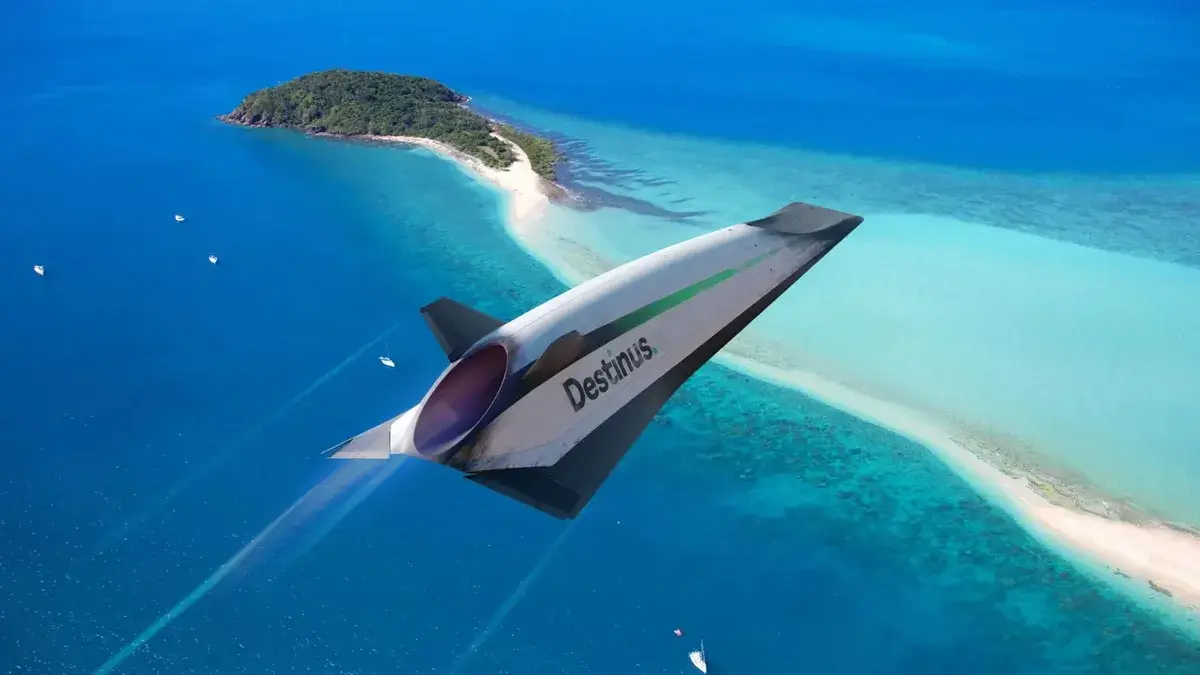
Destinus is a Swiss aerospace startup founded in 2021. The company is building hydrogen-powered jets designed to fly at hypersonic speeds reaching Mach 5 or five times the speed of sound. At that pace a flight from Frankfurt to Sydney would take around 4 hours and 15 minutes. The same trip today takes roughly 20 hours.
What Is Destinus and Who Is Behind It
Destinus was founded by physicist and serial entrepreneur Mikhail Kokorich in Payerne, Switzerland. The company employs around 100 engineers and aerodynamicists working across Europe including offices in Germany, France, Spain and the Netherlands.
The goal is to create jets that run entirely on liquid hydrogen. When hydrogen burns it produces only heat and water vapor. No carbon. No emissions. This makes it one of the cleanest fuels available for high-speed flight.
How Fast Are We Talking?
Destinus plans to fly at Mach 5 which is over 6,100 kilometers per hour. To put that in perspective the Concorde flew at Mach 2. Destinus aims to go more than twice as fast.
At that speed the company claims these flight times would be possible:
Frankfurt to Sydney in 4 hours and 15 minutes Frankfurt to Shanghai in 2 hours and 45 minutes Paris to New York in just 90 minutes
The Eiger and the Path to Hypersonic Flight
Destinus did not start by building a full passenger plane. The company took a step-by-step approach using smaller prototype aircraft first.
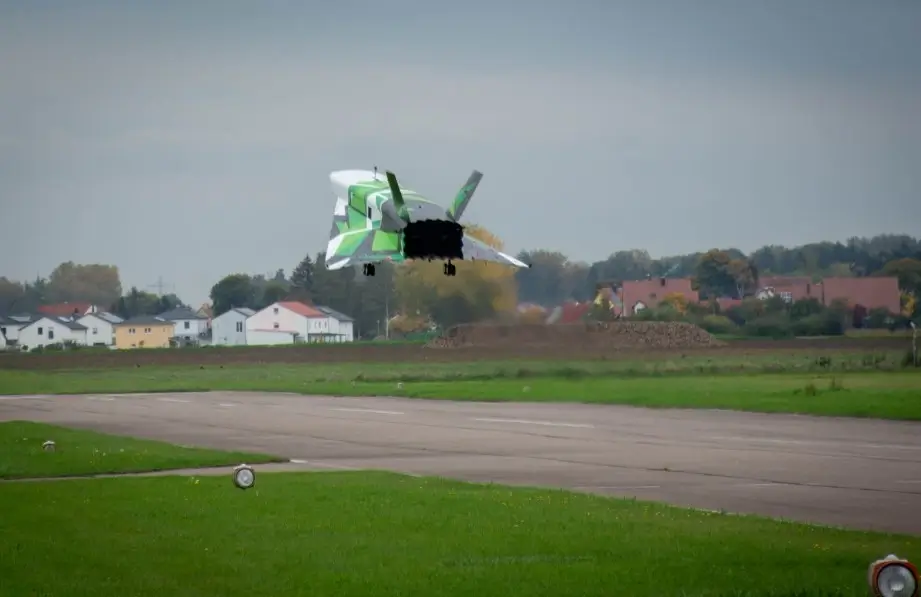
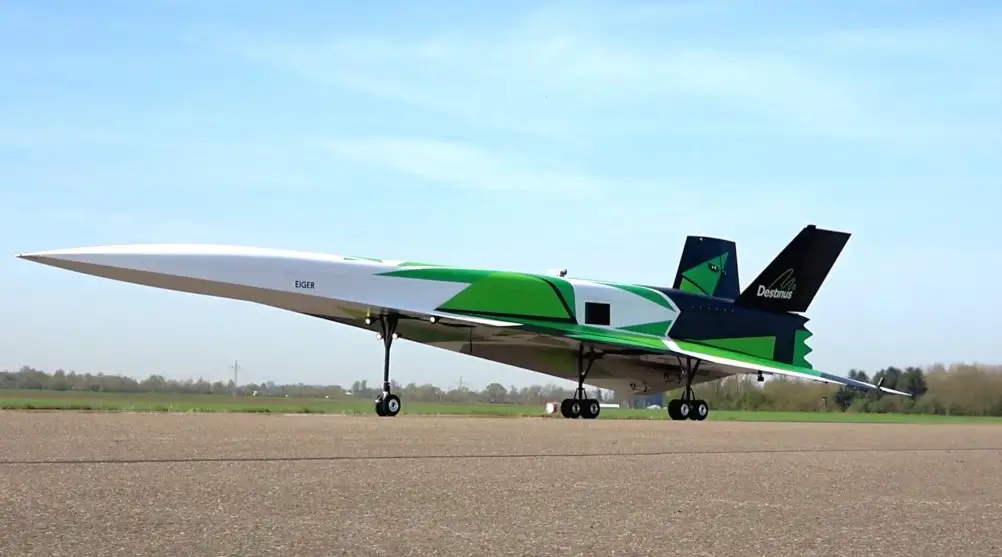
The first prototype called Jungfrau made its debut flight near Munich in 2021. The 12-foot Jungfrau and the larger 30-foot prototype Eiger have both achieved subsonic flight. These early tests gave engineers real flight data to build on.
In May 2023 Destinus achieved the first flight of its Jungfrau demonstrator incorporating hydrogen afterburners validating integrated propulsion under real conditions.
Then came Destinus 3. At the Paris Air Show in June 2023 Destinus unveiled its third demonstrator. If successfully flown the model would be the world’s first liquid hydrogen-powered supersonic unmanned vehicle aiming to achieve a speed of Mach 1.3.
By late 2024 the Destinus-3 prototype achieved Mach 1.3 and the company now aims to demonstrate full hypersonic flight in 2025. That would be a major milestone for the entire hydrogen aviation industry.
Spain Is Backing This Project
The Spanish government has become one of Destinus’s key partners. The Spanish Ministry of Science selected Destinus to participate in a national strategic initiative focused on hydrogen-powered aviation. As part of this two grants have been awarded.
The first covers a €12 million project where Destinus is collaborating with ITP Aero to build a hydrogen engine testing facility near Madrid. The second is a €15 million grant to research transporting materials using liquid hydrogen.
Davide Bonetti, VP of Business Development at Destinus, said the grants showed that the company is aligned with where Europe wants to go in aviation.
This work connects directly to Spain’s national hydrogen strategy which aims to make the country a global leader in renewable hydrogen production and hydrogen-based transport.
The Science That Makes This Possible
Hydrogen has an energy density roughly three times greater than standard jet fuel. That energy advantage is what makes hypersonic speeds achievable without carrying enormous amounts of fuel.
Destinus’s hybrid powerplant combines turbine engines that can run on kerosene or hydrogen with hydrogen afterburners and ramjets allowing efficient acceleration to Mach 5 velocities while minimizing emissions.
One of the hardest problems to solve at hypersonic speeds is heat. At 6,100 kilometers per hour the outside of an aircraft can reach extreme temperatures.
Researchers at RMIT University in Melbourne developed 3D-printed catalysts that can actually use liquid hydrogen as a cooling agent to manage this heat while powering the engine at the same time. This kind of dual function is exactly what makes hydrogen so attractive for hypersonic flight.
What Comes Next: The Destinus S and L
Destinus aims to launch the world’s first commercial hypersonic passenger plane called the Destinus S between 2030 and 2032.
It will be entirely powered by hydrogen with a proposed cruising speed of Mach 5 and a capacity to accommodate 25 passengers. A larger model the Destinus L will transport 300 to 400 passengers at speeds up to Mach 6.
Destinus plans to introduce the Destinus L in the 2040s. That aircraft would transport passengers at speeds of up to Mach 6 rendering all destinations on Earth reachable within three hours.
Is This Actually Going to Happen?
Destinus is further along than most people realize. The prototypes have flown. The hydrogen afterburner technology has been tested in the air. A Mach 1.3 speed was reached in 2024. The company has real funding, real government partnerships and real revenue.
That said some aerospace experts remain cautious. Aerospace expert Eric Tegler writing for Forbes described Destinus’s goals as ambitious noting that its timeline core mission and path to profitability shift every year.
There are also real-world challenges beyond the engineering. Producing clean hydrogen at scale is still expensive. Regulations for hypersonic passenger flight do not yet exist.
Sonic booms over populated areas are restricted by law. Destinus says it plans to fly over oceans and unpopulated areas during the fastest parts of each journey.