Tesla is facing a rising number of unsold cars, especially in Austin, Texas. This comes at a time when shareholders are preparing to vote on a massive $56 billion pay package tied to the company’s stock performance.
Tesla’s troubles seem endless. The electric vehicle giant has been making headlines for all the wrong reasons. While the Cybertruck’s polarizing design has drawn attention Tesla faces a bigger problem:
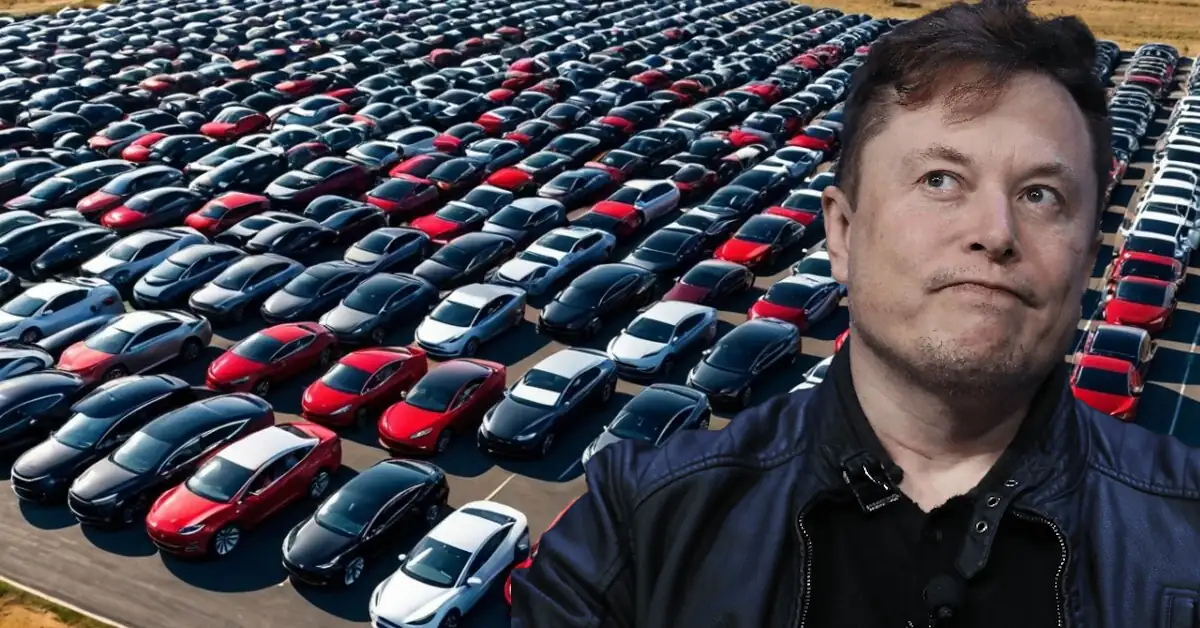
A growing stockpile of unsold vehicles particularly in Austin Texas. The struggle to sell cars is increasingly visible especially from above.
Growing Inventory of Unsold Vehicles
Reports of unsold Teslas surfaced last month when Channel 7 News in Australia showed video of cars piling up at the port of Melbourne.
Despite cutting prices by up to AUS $20,000, sales are still below expectations. Channel 7 News cites the lack of a comprehensive charging network and falling resale values as reasons for the low demand.
Sherwood News compared Tesla parking lots using satellite images from October 2023 and March 2024. The analysis showed a notable increase in occupied parking spaces by March, supporting Tesla’s first-quarter earnings report released in April.
The report showed that the company made a lot more cars than it sold, with deliveries decreasing by 8.5% compared to the previous year, and almost 47,000 more cars produced than sold. This was Tesla’s first drop in sales since the production pause caused by the 2020 pandemic.
Rani Molla of Sherwood News reports that Tesla produced 433,371 cars in the first quarter of this year but delivered only 386,810, leaving about 47,000 extra vehicles. This is more than double the surplus from a year ago and the largest in the company’s history.
According to Molla, this surplus occurs as Tesla faces challenges like slowing electric vehicle sales growth, increased competition, and chaotic leadership.
Satellite Analysis Reveals Surplus
According to satellite imagery from SkyFi, these unsold vehicles are stationary in parking lots, awaiting transportation.
Sherwood News also identified similar occurrences nationwide, such as at Chesterfield Mall in St. Louis, where excess inventory, including nearly 500 Teslas, was observed in satellite images from May 2024.

Adding to Tesla’s challenges, shareholders are set to vote this week on Elon Musk’s nearly $56 billion compensation package at the company’s annual meeting.
The vote comes after a Delaware judge rejected the compensation deal in February, saying Musk had overly close ties with board members involved in approving it.
At the same time Tesla is dealing with growing concerns about unsold vehicles, raising questions about whether demand is keeping up with the company’s ambitious production targets.
This gap between production and sales could worry investors further, especially as Tesla continues to face criticism over leadership decisions and its long-term strategy.
How Tesla handles these operational problems in the coming months could play a major role in shaping the company’s future. Investors are also closely watching possible changes to Tesla’s corporate structure, including discussions around executive pay and even relocating the company’s headquarters.
The outcome of the shareholder vote and Tesla’s efforts to reduce excess inventory could have a major impact on the company’s position in the highly competitive electric vehicle market.
The Future of Tesla and the EV Revolution
Tesla is now building more cars than people are buying. The company’s CEO once predicted Tesla would sell 10 million vehicles a year by 2030, supported by new factories in Europe, Mexico, and India. But that strong optimism has also created a growing number of unsold vehicles.
Interest in electric cars has changed noticeably over the past six months. The exact reason is unclear, but the market no longer feels as strong as it did before.
Some US states, including Virginia, are pushing back against California’s clean transportation policies. At the same time, the US is concerned about low-cost electric cars coming from China, while the European Union is considering higher tariffs on Chinese EV imports.
Chinese automakers are also putting pressure on Tesla with aggressive pricing, even as Tesla remains one of the leaders in EV technology. Large numbers of unsold Teslas sitting in storage lots are becoming a worrying sign for the electric vehicle industry.
The move toward zero-emission transportation remains important for cutting pollution and reducing environmental damage. However, momentum appears to be slowing.
Many automakers are now putting more focus on hybrid vehicles, a technology Toyota introduced decades ago. Unlike traditional car companies, Tesla cannot fall back on gasoline or hybrid models to attract hesitant buyers.
While other automakers can offer customers multiple choices, Tesla depends entirely on electric vehicles. That could become a serious challenge if EV demand continues to weaken.