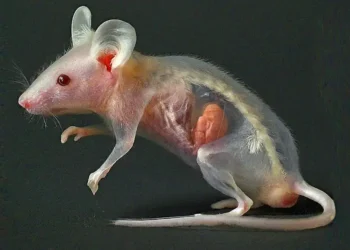

A parasite commonly found in cat feces could someday help scientists treat serious brain diseases like Alzheimer’s and Parkinson’s.
Researchers are studying a modified version of Toxoplasma gondii, a parasite known for its unusual ability to reach the brain.
Scientists believe it may one day be used to carry helpful proteins directly into brain cells, something that has been extremely difficult in modern medicine.
The research is still in the early stages, but experts say the idea could open the door to new treatments for neurological disorders that currently have limited options.
What is Toxoplasma gondii?
Toxoplasma gondii is a tiny parasite that causes an infection called toxoplasmosis, which affects millions of people worldwide.
People can become infected by touching cat feces, eating undercooked meat, drinking contaminated water, or eating unwashed fruits and vegetables. Cats are important in its life cycle because the parasite reproduces inside them.
Most healthy people don’t notice any symptoms. If symptoms do appear, they are usually mild and flu-like, such as fever, tiredness, headaches, body aches, or swollen glands. The infection usually clears on its own without treatment.
However, it can be more serious for pregnant women and people with weak immune systems.
Why Scientists Are Interested in This Parasite?
Treating brain diseases is difficult mainly because of a natural defense system called the blood-brain barrier. It protects the brain by blocking harmful substances, but it also makes things harder by stopping many medicines from getting through.
That’s where the parasite Toxoplasma gondii comes in. the parasite Toxoplasma gondii. It’s often linked to cat feces, but it has one unusual ability it can cross the blood-brain barrier and enter the brain. Once there, it can interact with brain cells.
Researchers from the University of Glasgow and Tel Aviv University studied this trait and carefully modified the parasite so it would no longer cause infection.
Instead of being harmful, it was redesigned to act as a carrier that can deliver useful therapeutic proteins directly into the brain.
The goal is to turn it into a natural delivery system that can reach brain cells that are normally very hard to access. This could eventually help in treating diseases like Alzheimer’s, Parkinson’s, and Rett Syndrome.
In their work, the researchers focused on a protein called MeCP2, which is important for treating Rett Syndrome, a severe brain disorder caused by changes in the MECP2 gene.
Early results showed that the engineered parasite was able to produce and deliver this protein in lab-grown brain tissue and in mice.

Challenges and Future Directions
This idea is exciting, but it is still a long way from becoming a real treatment. Scientists say it will take years of careful testing before it can be considered safe for patients.
One of the biggest concerns is making sure the parasite dies after it delivers its cargo, so it doesn’t cause any harm in the body.
The study is based on a very different way of thinking in medicine. Instead of fighting against organisms that can reach the brain, researchers are asking whether those same natural abilities can be used to help deliver treatments.
In a press release, Professor Oded Rechavi from Tel Aviv University said the research is very important and unusual. He explained that nature has already created organisms that can affect the brain, so instead of building new systems from scratch, scientists could learn from them and use their abilities for medicine.
Professor Lilach Sheiner from the University of Glasgow, one of the lead researchers, called the project highly creative. She said the team was thinking in new ways to solve a long-standing problem in medicine: how to deliver treatments directly to the brain for brain-related disorders.
She also warned that the idea still has risks. Because Toxoplasma infection can be dangerous, she said much more research is needed to make sure it is safe and effective before it could ever be used as a treatment.
The study, titled “Engineering a Brain Parasite for Protein Delivery to the Central Nervous System,” was published in Nature Microbiology.
Written by
Engineering Junkies Team
We are a team of engineers, researchers and technology writers who love breaking down complex topics into clear and honest content. Every article we publish is built on real research and honest writing.
You can reach us through our Contact Us page.