Engineering Junkies
  • HOME
  • News
  • Technology
    • AI
    • Robotics
  • Science
  • Gadgets
  • Transport
    • Cars
No Result
View All Result
  • HOME
  • News
  • Technology
    • AI
    • Robotics
  • Science
  • Gadgets
  • Transport
    • Cars
No Result
View All Result
Engineering Junkies
No Result
View All Result
Home Science

Nasa Wants Volunteers to Live in Its Mars Simulation for a Year

If You're into Stem and Thrive on Challenges, This Job Is Perfect for You.

Engineering Junkies by Engineering Junkies
25/05/2026
in Science
A A
Share on FacebookShare on Twitter

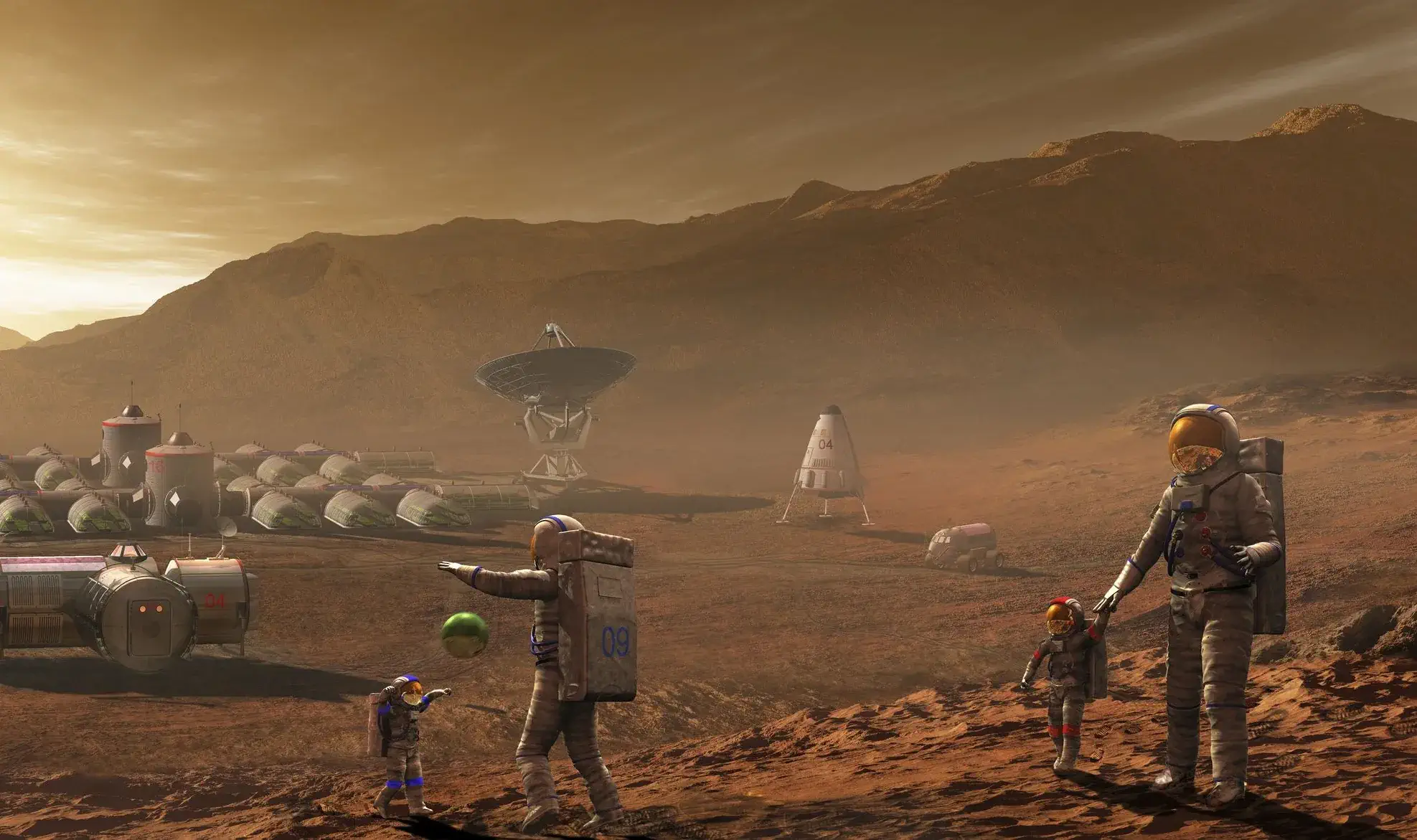
Nasa Wants Volunteers to Live in Its Mars Simulation CHAPEA for a Year

NASA is searching for four individuals to participate in a pretend Mars mission. They issued a call for applicants willing to spend a year in a simulated Mars habitat, offering compensation.You can apply on the CHAPEA website until April 2.

They seek healthy adults with science degrees, military, or piloting experience.

The Crew Health and Performance Exploration Analog (CHAPEA) conducts one-year “missions” where volunteers, acting as analog astronauts, live in a 3D-printed habitat in Houston, Texas, simulating space conditions.
NASA CHAPEA crew
NASA CHAPEA Crew: NASA

The chosen volunteers will join NASA’s one-year simulated Mars surface mission to gather data for future human exploration of the red planet.

This is NASA’s second year-long Mars experiment, following the one that began in June 2023.

The upcoming CHAPEA Mission 2, the second installment of a planned trilogy, is set to commence in spring 2025.

During these missions, a carefully selected four-person crew will collaborate and live within a spacious 3D-printed base spanning 1,700 square feet.
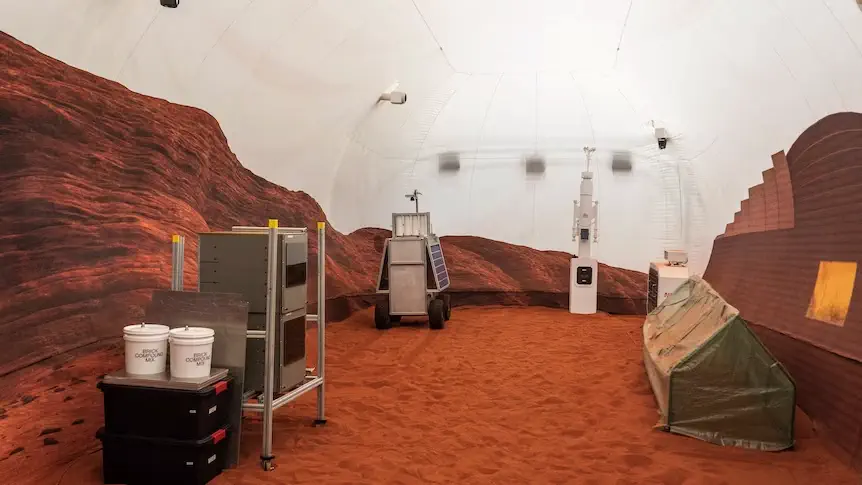
Inside NASA's simulated Mars habitat at the Johnson Space Center in Houston, Texas, U.S.
Inside NASA’s Simulated Mars Habitat at the Johnson Space Center in Houston, Texas, U.S.

This base is located at NASA’s Johnson Space Center in Houston, serving as a realistic simulation environment for space exploration missions.

The base, known as Mars Dune Alpha, mimics the difficulties future Mars explorers will encounter, such as limited resources, equipment malfunctions, communication delays, and other stressful scenarios.

Applications for the second CHAPEA mission are available until April 2, with the mission expected to launch sometime in 2025.

Nasa’s Requirements for Simulated Mars Astronauts

NASA seeks fit, non-smoking American citizens aged 30 to 55, fluent in English, and eager for unique adventures. Candidates must also be keenly interested in aiding NASA’s preparations for the inaugural human mission to Mars.

Crew members need a master’s degree in a STEM Field like engineering, math, biology, physics, or computer science. They also require at least two years of professional STEM work experience or a minimum of 1,000 hours piloting aircraft.
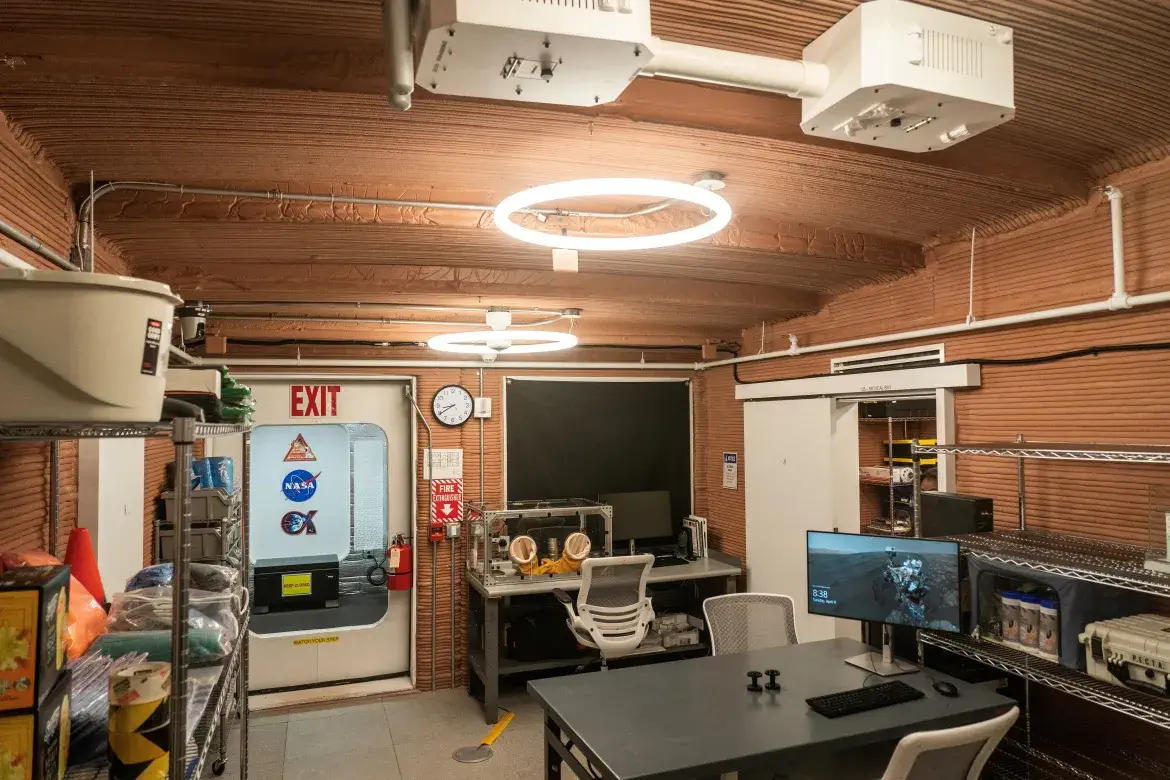
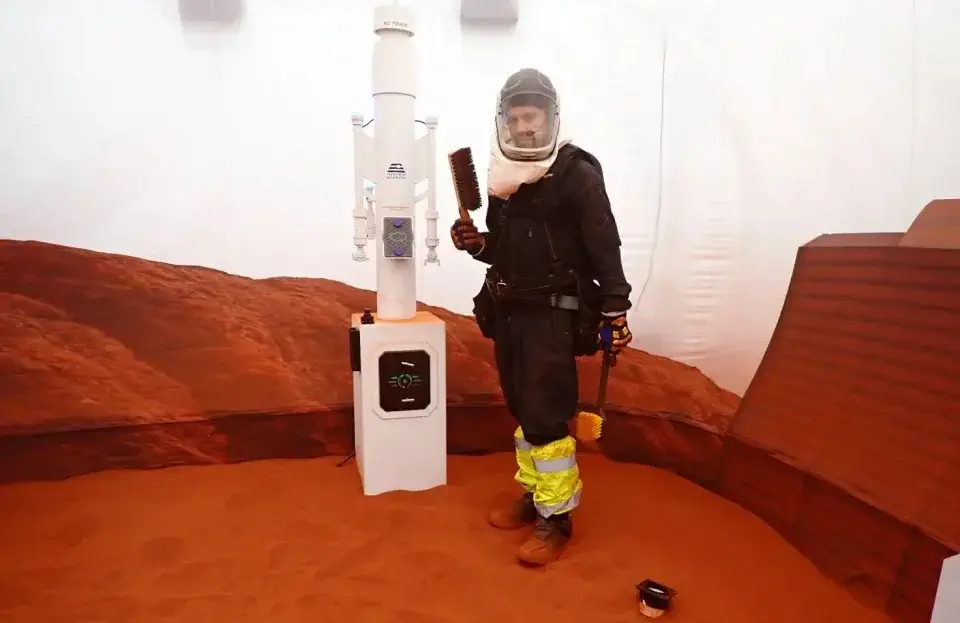
working area inside the Mars Dune Alpha, NASA's simulated Mars habitat
A Working Area Inside the Mars Dune Alpha, NASA’s Simulated Mars Habitat

Applicants must undergo a criminal background check, psychiatric screening, and medical evaluation to qualify. They’re committing to a year of intense isolation in tight quarters with three others, following a strict schedule.

The application provides insights into the job’s demands by asking questions such as: “Are you ready to eat packaged, long-lasting space foods without having a say in the menu for a year?” and “Are you prepared to spend extended periods, up to two weeks, with little or no contact with family and friends?”
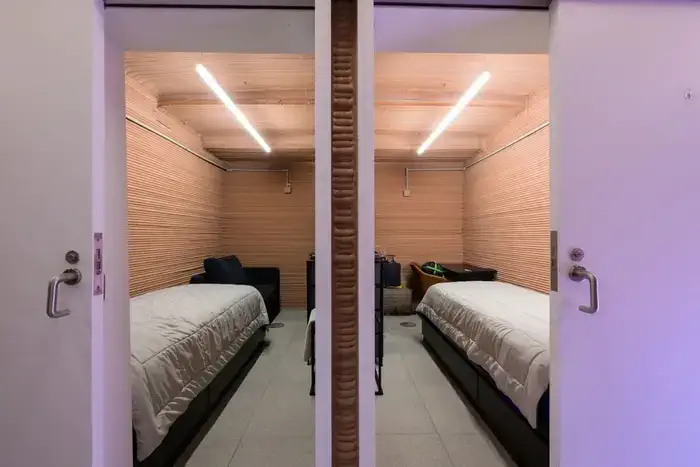
Crew Quarters Inside the Nasa's Simulated Mars Habitat
Crew Quarters Inside NASA’s Simulated Mars Habitat

Further, there are monthly tests for blood, urine, stool, and saliva, limited use of social media, and a 20-minute delay in communications with people outside the habitat.

NASA states that food allergies, dietary restrictions, and gastrointestinal disorders are disqualifying factors because CHAPEA cannot accommodate them. Certain medications, such as blood thinners and sleeping aids, also disqualify applicants.
/ You Might Also Like /

  • Astronomers Discover Earth-Sized Exoplanet with Active Volcanoes
  • Watch SpaceX’s Journey to Mars in This Stunning Animation
  • Google’s Gemini Chatbot Will Save Your Conversations for Three Years
  • ChatGPT Can Now Make AI Videos with Sora Text-To-Video Model
Tags: CHAPEA MissionMarsNASANewsSpace
Previous Post

Yamaha Unveils Hydrogen-Powered Outboard Motor for Boats

Next Post

Why Japan Launched a Wooden Satellite Into Space?

Related Posts

Why Humans Haven’t Returned to the Moon in Over 50 Years.

Why Humans Haven’t Returned to the Moon in Over 50 Years

30/05/2026

On December 14, 1972, astronaut Eugene Cernan climbed the ladder of the Apollo 17 lunar module and left the Moon....

FD&C Yellow 5 (tartrazine), the dye that gives foods, drugs, and cosmetics a lemon-yellow color, can also be used to make mice transparent, as shown in this generative image.

Scientists Make Mouse Skin Transparent Using Common Food Dye

30/04/2026

FD&C Yellow 5 (tartrazine), the dye that gives foods, drugs, and cosmetics a lemon-yellow color, can also be used to...

Scientists are exploring how Toxoplasma gondii, a parasite in cat feces, might help treat Alzheimer's and Parkinson's

Parasites Found in Cat Poop Could Cure Alzheimer’s and Parkinson’s

30/04/2026

Scientists are exploring how Toxoplasma gondii, a parasite in cat feces, might help treat Alzheimer's and Parkinson's A parasite commonly...

UK Developing Worlds First Lung Cancer Vaccine LungVax

UK Developing LungVax World’s First Lung Cancer Vaccine

25/05/2026

LungVax Could Become the World’s First Vaccine to Help Prevent Lung Cancer Scientists in the UK are working on a...

Why Humans Haven’t Returned to the Moon in Over 50 Years.
Science

Why Humans Haven’t Returned to the Moon in Over 50 Years

30/05/2026
Do electric vehicles catch fire more than gas cars comparison between EV and gasoline vehicle fires
Transport

Do Electric Vehicles Catch Fire More Than Gas Cars?

02/06/2026
Illustration showing human thinking compared with AI, explaining how ChatGPT uses tokens, embeddings, attention, and transformers to predict words instead of thinking like a human.
AI

How Does AI Think? The Science Behind Large Language Models

02/06/2026
FD&C Yellow 5 (tartrazine), the dye that gives foods, drugs, and cosmetics a lemon-yellow color, can also be used to make mice transparent, as shown in this generative image.
Science

Scientists Make Mouse Skin Transparent Using Common Food Dye

30/04/2026

Subscribe

Yamaha's prototype hydrogen outboard and vessel on show at Miami Boat Show 2024
Transport

Yamaha Unveils Hydrogen-Powered Outboard Motor for Boats

17/05/2026
the pangeos yacht
Technology

Saudi Arabia New $8 Billion Turtle-Shaped Floating City

24/05/2026
Apple's Long-Rumored Electric Car Project Is Dead
Transport

Why Did Apple End Its Car Project After Spending Billions?

07/05/2026
PetBot Loona
Technology

Robot Pet Loona an Adorable and Friendly Companion

24/05/2026
engineering-junkies-3d-logo

Engineering Junkies

A Publication Led by a Team of Expert Researchers in Technology, Science, and Current Events. Stay Informed by Joining Our Community Today.

Follow Us

Categories

  • DIY & Home Improvement
  • Engineering
  • Gadgets
  • News
  • Science
  • Technology
    • AI
    • Robotics
  • Transport
    • Cars

Company

  • About Us
  • Advertise
  • Contact Us
  • Cookie Policy
  • Editorial Guidelines
  • Legal Policies
  • Privacy Policy
  • Terms of Service

© Copyright 2023 -All Rights Reserved by Engineering Junkies.

No Result
View All Result
  • Home
  • News
  • Technology
    • AI
    • Robotics
  • Science
  • Gadgets
  • Transport
    • Cars
  • Engineering

© Copyright 2023 -All Rights Reserved by Engineering Junkies.