
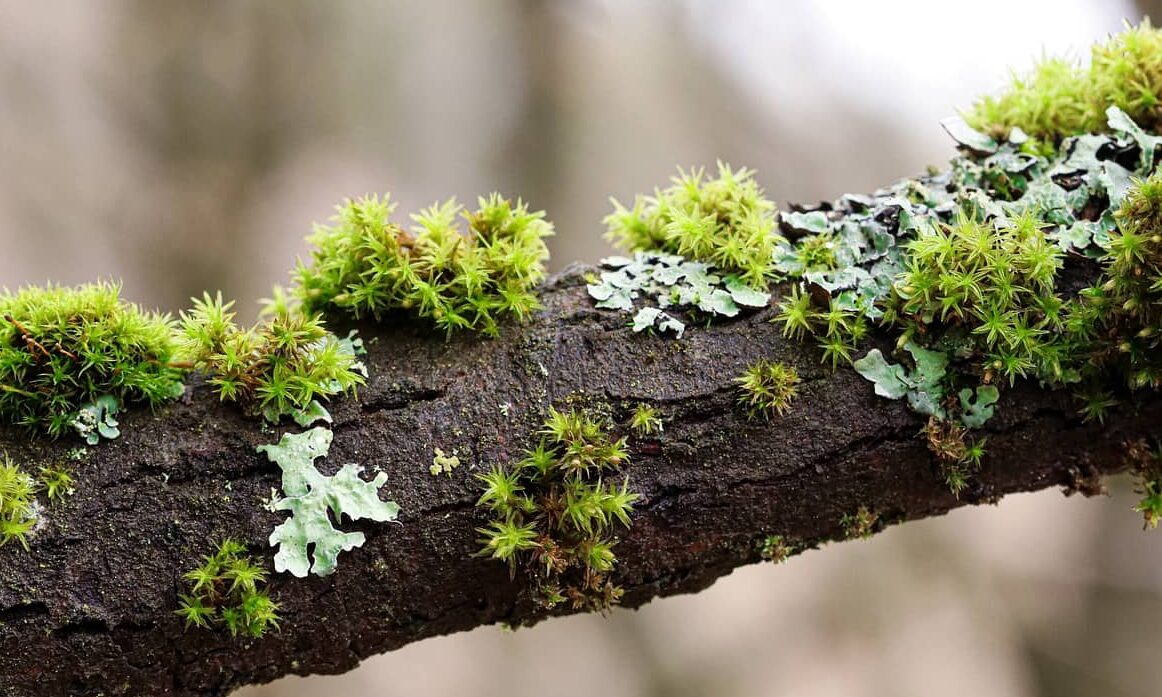
A plant that has existed for 450 million years might be our best weapon against climate change.
It is not a tree. It is not a flower. It is the tiny green stuff you have been stepping on your whole life.
Scientists just discovered that moss is pulling billions of tons of carbon out of the air every single year. And nobody was paying attention until now.
Moss Has Been Around Longer Than You Think
Moss is one of the oldest living things on Earth.
It existed long before trees, grasses or flowers. It survived ice ages, volcanic eruptions and mass extinctions. And it did all of that without roots, without soil and without a complex system to move water through its body.
Regular plants use internal tubes to carry water from roots to leaves. Moss absorbs water directly through its surface like a living sponge.
Ecologist David Eldridge from the University of New South Wales in Australia explains how it works.
“Mosses don’t have the plumbing that an ordinary plant has. But moss survives by picking up water from the atmosphere.”
When moss dries out it does not die. It curls up and goes into a deep sleep. It can stay that way for decades and wake up the moment water touches it again.
“We’ve taken mosses out of a packet after 100 years, squirted them with water and watched them come to life,” says Eldridge. “Their cells don’t disintegrate like ordinary plants do.”
Nothing else on land does that.
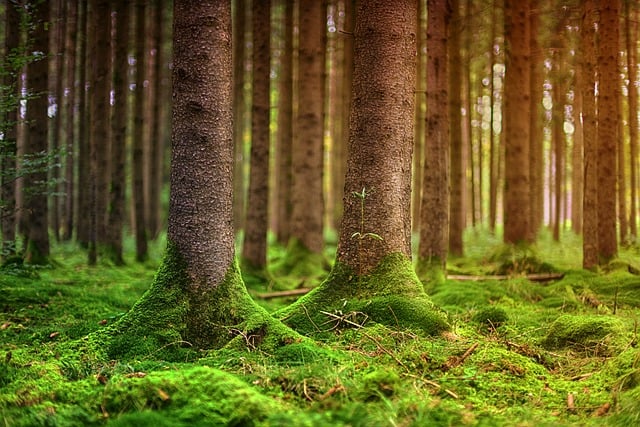
The Largest Moss Study Ever Done Changed Everything
For a long time scientists focused on trees and grasses when studying how nature fights climate change.
Moss was ignored.
That finally changed when a research team from the University of New South Wales Sydney collected soil moss samples from more than 123 ecosystems across every continent. Tropical rainforests. Dry deserts. Frozen tundra. Everything in between.
What they found was not what anyone expected.
There are roughly 12000 species of moss on Earth. Together they cover close to four million square miles of land. That is an area the same size as Canada.
Despite covering this enormous stretch of the planet moss had never been seriously studied for its role in climate change.
The team identified 24 separate ways that soil moss helps ecosystems. It feeds underground life. It moves nutrients like nitrogen and phosphorus through the soil. It breaks down dead matter. It controls harmful pathogens that damage plant roots.
Moss was quietly doing all of this the entire time. We just were not looking.
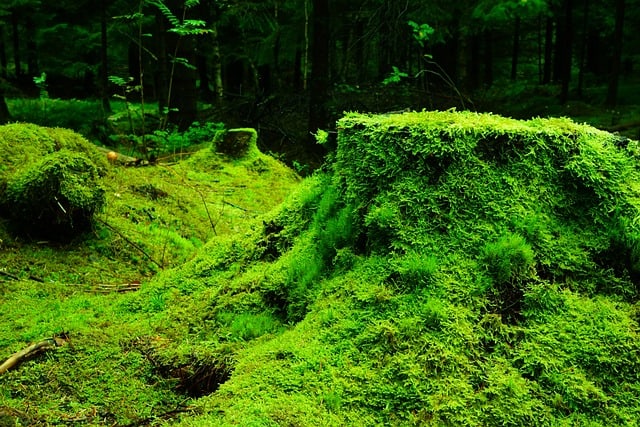
Moss Is Pulling Billions of Tons of Carbon Out of the Air
This is the number that stopped climate scientists in their tracks.
Soil moss pulls 7.08 billion tons of carbon dioxide out of the atmosphere every year compared to soil that has no moss growing on it.
To put that in perspective think about every car, factory, farm and forest that gets cleared on the planet in a year. All the carbon that releases into the air from deforestation, grazing and agriculture combined. Moss absorbs six times that amount and locks it underground.
David Eldridge put it plainly.
“So you’ve got all the global emissions from land use change such as grazing and clearing vegetation and activities associated with agriculture. We think mosses are sucking up six times more carbon dioxide. It’s not one to one. It’s six times better.”
Trees store carbon in wood and roots. Moss pushes carbon deep into the soil itself where it stays locked away for a long time.
Both matter. But moss is doing this silently across millions of miles of land that trees will never reach.
Moss Makes the Soil Around It Healthier
This part surprised even the researchers.
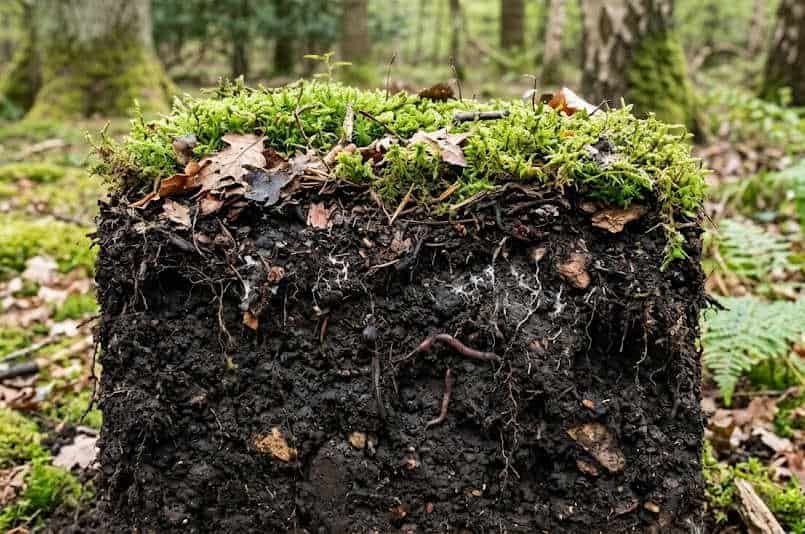
Soil with moss growing on it has higher carbon levels, more nutrients, faster breakdown of organic matter and far fewer harmful pathogens compared to bare soil with no moss.
Moss does not just sit there looking green. It is actively improving the ground beneath it for every plant, insect and microbe that depends on healthy soil.
There is also a very common misunderstanding that moss on soil means something is wrong. David Eldridge wants to set that straight.
“People think if moss is growing on soil it means the soil is sterile or has something wrong with it. But it’s actually doing great things. Like adding more carbon and nitrogen as well as being a primary stabilizer when you get lots of disturbance.”
Ecosystem ecologist Peter Reich who was part of the research added this.
“Like forests mosses stabilize the microclimates and physical environments beneath them. They provide minerals and carbon to the soil and offer a better home for the soil microbiome than areas of bare ground.”
Healthy soil means healthier plants. Healthier plants mean more carbon absorbed from the air. Moss quietly starts that whole chain.
Moss Thrives Where No Other Plant Can Survive
Forests get all the attention when people talk about the climate.
But trees cannot grow everywhere.
Deserts, mountain ridges, polar regions and rocky coastlines cover a massive part of our planet. In most of those places moss is the only plant doing meaningful work at all.
Types like Sphagnum, Hylocomium and Ptilium form thick mats across the ground. They keep entire ecosystems running in tundra, bog and desert environments where almost nothing else can live.
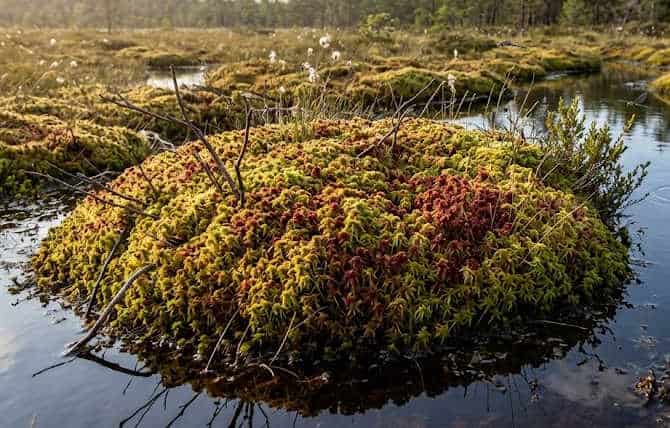
Sphagnum moss is especially critical. It grows in peatlands which have stored enormous amounts of carbon over thousands of years. If those peatlands dry out that carbon gets released back into the air very quickly.
Protecting the moss that holds peatlands together is one of the most urgent climate actions we have available right now.
After disasters like volcanic eruptions moss is also one of the very first things to grow back. It arrives before almost everything else and prepares the ground for the plants that follow.
Scientists Now Want to Bring Moss Back to Damaged Land
The research team is not stopping at what they discovered.
They want to know if moss can be deliberately replanted on damaged and degraded land to help it recover faster.
“We are also keen to develop strategies to reintroduce mosses into degraded soils to speed up the regeneration process,” said Eldridge. “Mosses may well provide the perfect vehicle to kick-start the recovery of severely degraded urban and natural area soils.”
A 2025 study published in the journal Soil supported this idea directly.
It found that replanting moss on damaged ground improves how water enters the soil and slows down how fast the surface dries out. That makes moss a genuinely promising solution for restoring damaged farmland and urban green spaces in cities.
This is not a distant idea. Scientists are working on it right now.
What You Can Actually Do to Help Moss and the Climate
Most climate solutions feel out of reach for ordinary people.
This one does not.
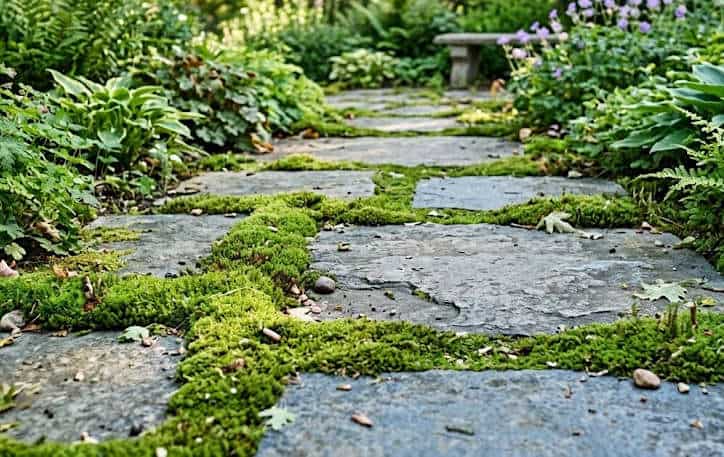
If you have a garden stop trying to remove moss. Let it grow. It is improving your soil for free.
If you have bare patches of soil in your garden or on a balcony you can actually buy moss and plant it yourself. It is low maintenance and needs very little water once it is established.
If you live in a city you can support local green space projects that restore natural ground cover. Many of these projects now include moss as part of their planting strategy.
And simply talking about what moss does shares this knowledge with people who have never thought about it. Most people still think moss is a weed. Changing that view is a small but real contribution.
Why This Discovery Matters More Than Most Climate News
Governments are spending billions of dollars building machines that pull carbon out of the air.
All this time a tiny ancient plant covering an area the size of Canada has been doing exactly that job for free.
Moss needs no funding. It needs no machines. It creates no pollution. It just grows.
The challenge now is to stop damaging the places where moss already exists and to start bringing it back where it has been lost. That costs far less than any carbon capture technology currently being developed.
Peter Reich said it best.
“Mosses matter because even tiny plants in harsh environments are capable of acquiring and storing carbon just like large trees do elsewhere.”
We do not always need the biggest solution. Sometimes the answer has been quietly growing under our feet for 450 million years.
Frequently asked questions
Sources: Nature Geoscience 2023, UNSW Sydney, SOIL Journal 2025, University of Michigan