
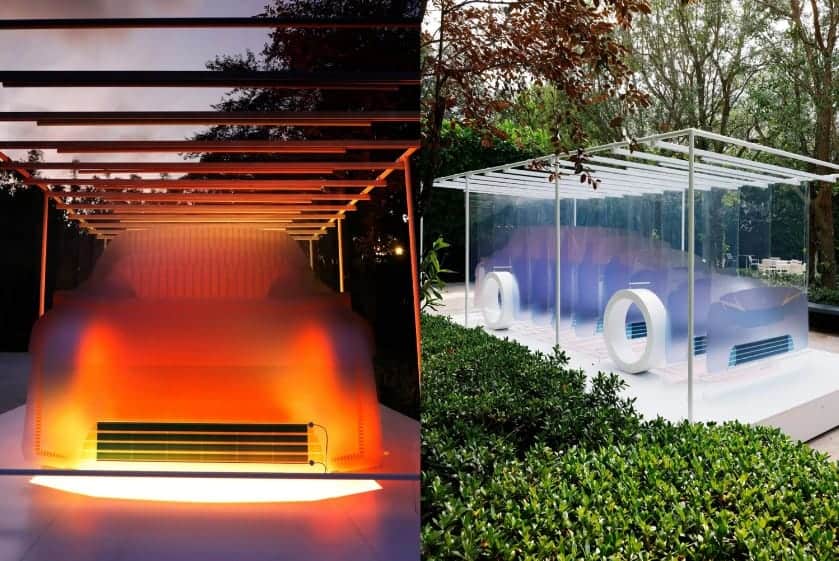
What happens when a luxury car brand teams up with a solar design pioneer? You get one of the most talked-about art installations at Miami Art and Design Week.
Lexus and Dutch solar designer Marjan van Aubel revealed “8 Minutes and 20 Seconds” at the sculpture garden of the Institute of Contemporary Art Miami (ICA Miami) on December 6, 2023. It was van Aubel’s first public project in Miami and it left quite an impression.
The name alone tells a story. Sunlight travels 93 million miles to reach us in exactly 8 minutes and 20 seconds. That tiny window of time became the heartbeat of an entire artwork.
What Is the Installation About?
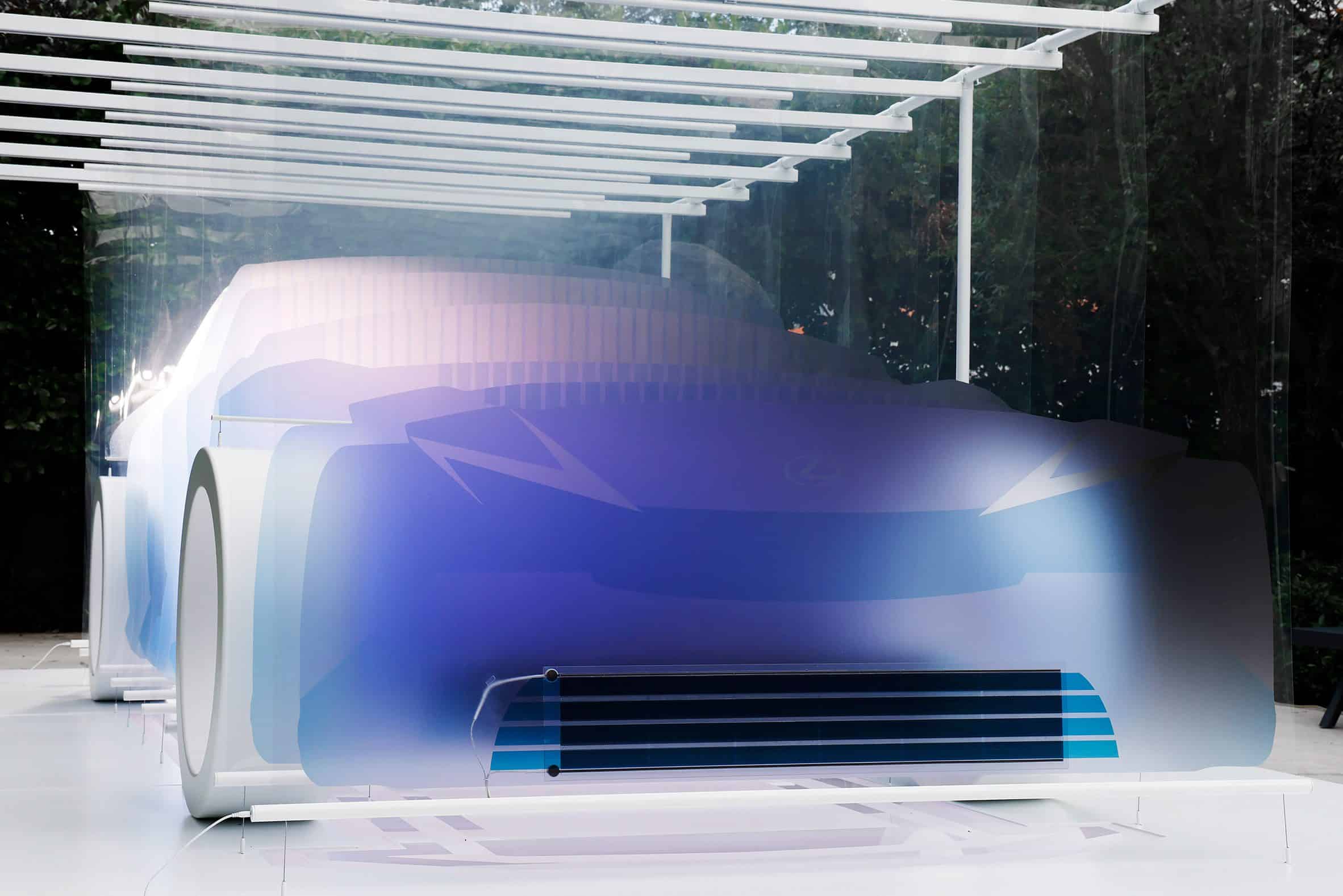
At its core, this is a life-sized interpretation of the Lexus LF-ZC concept car. LF-ZC stands for Future Zero-emission Catalyst and it is Lexus’s vision for the next generation of battery-powered electric vehicles.
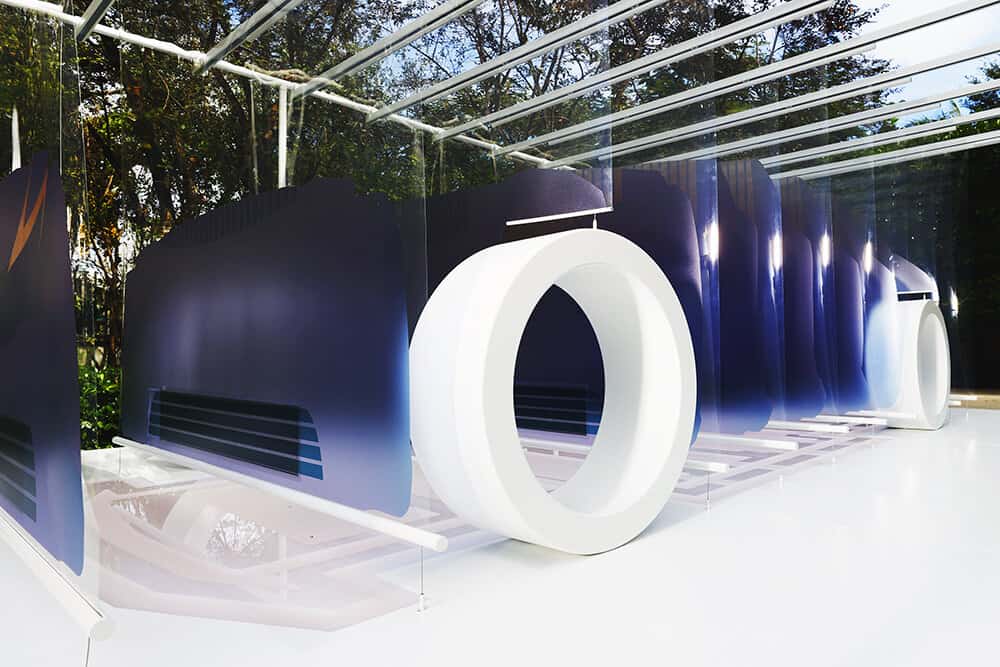
But instead of showing you a physical car, van Aubel recreated it using sheets of colorful organic photovoltaic (OPV) cells arranged into the car’s silhouette. The result is a glowing, transparent sculpture that you can walk around and experience from every angle.
As you move around it, the car appears to shift and come alive. The solar sheets catch and play with light in a way that makes the whole piece feel like it is in motion.
The Solar Technology Behind It
Here is where things get interesting for anyone curious about the future of clean energy.
Traditional solar panels use synthetic materials and can take years to pay back the energy used to make them. OPV cells are different.
Van Aubel has explained that organic photovoltaic cells do not contain the synthetic materials found in everyday solar panels and their energy payback time is just a couple of months rather than a couple of years. She has also pointed out that very soon they could be printed on an inkjet printer in whatever shape you want.
That last point is worth sitting with. Printable solar cells in any shape. That is not science fiction. That is where this technology is heading.
The installation runs entirely on solar power during the day. Batteries built into the base store up that energy throughout the day and power the interactive light and sound features even after the sun goes down.
A Sculpture That Changes with the Sun
One of the most beautiful aspects of this piece is how it responds to time.
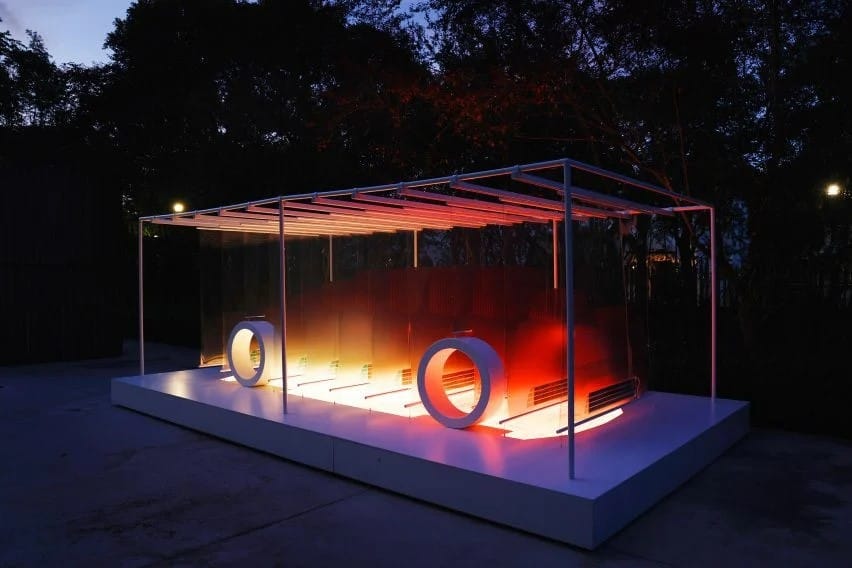
Throughout the day, the colors on the OPV sheets shift from warm sunrise tones in the morning to cooler and deeper hues as the afternoon fades. The sculpture is essentially a living clock that tells time through color.
Four motion sensors are embedded in the base. When someone walks near them, ripples of light spread across the floor beneath the sculpture like water. Lexus designed this effect as a visual representation of their EV platform concept.
The Sound That Completes the Experience
Great art does not just speak to your eyes. This installation was designed to wrap around you completely.
The piece plays a calming ambient melody that was composed specifically for the space. It weaves together soft piano notes, warm string instruments, and chimes. Periodically, birdsong drifts through the music as a reminder of the natural world.
The composer also included woodsy bamboo tones as a nod to the real bamboo interior found inside the Lexus LF-ZC concept car. It is a thoughtful detail that connects the artwork back to the vehicle that inspired it.
What Makes This Different from Regular Art
Van Aubel has a philosophy that makes her work stand out. She believes solar energy should not just be efficient. It should be beautiful. She has spoken about wanting to shift solar from being something purely technical to something emotional and human.
That mindset is exactly what this installation embodies. Most people associate solar panels with bulky grey roof tiles. Van Aubel’s work challenges that assumption at every turn. When solar energy looks this good, the conversation around clean energy changes.
As she put it, the installation does not focus on light itself but on the transformative possibilities of light.
The Story Did Not End in Miami
After its debut in Miami the installation traveled to Milan Design Week in April 2024 where it was updated to be even more reflective and immersive within its new setting at the Superstudio garden.
An interactive element called the “interactive sun” was added featuring 16 of van Aubel’s Sunne lamps arranged in a circle. Visitors could touch a sensor inside the structure to trigger personalized color changes.
The installation was also designed with end of life in mind. The materials can be disassembled and recycled rather than sent to landfill.
Why is This Special?
We are at a turning point with renewable energy. Solar technology is advancing faster than most people realize and OPV cells are one of the most exciting frontiers in that space. They are flexible, colorful, transparent, and could eventually be printed onto almost any surface imaginable.
Van Aubel’s work helps people feel that possibility rather than just read about it in a technical report. And that emotional connection is what actually changes minds and behaviors.
The second Solar Biennale she co-founded ran through September 2025 at the Museum of Contemporary Design and Applied Arts in Lausanne, Switzerland. The movement she started is growing.