Engineering Junkies
  • HOME
  • News
  • Technology
    • AI
    • Robotics
  • Science
  • Gadgets
  • Transport
    • Cars
No Result
View All Result
  • HOME
  • News
  • Technology
    • AI
    • Robotics
  • Science
  • Gadgets
  • Transport
    • Cars
No Result
View All Result
Engineering Junkies
No Result
View All Result
Home Technology

Mount Everest’s First Drone Delivery: A Game-Changer

by Engineering Junkies
25/05/2026
in Technology
A A
Share on FacebookShare on Twitter
During the Tests, Flycart 30 Reached a Height of 6,191.8 Meters on Mount Everest
During the Tests, Flycart 30 Reached a Height of 6,191.8 Meters (20,314 Feet) on Mount Everest

Mount Everest has seen its first-ever drone delivery during a successful test carried out in April this year. This milestone could help improve support for climbers, strengthen rescue operations, and assist environmental protection efforts in extreme high-altitude conditions.

The operation was led by the technology company DJI, working alongside Nepalese Airlift, video production team 8KRAW, and experienced local guides from the region.

Drone Capabilities and Design

The mission used DJI’s FlyCart 30, a heavy-lift drone built for long-distance transport. It can carry up to 15 kilograms (33 pounds) and is designed to deliver supplies to places that are normally very difficult or dangerous to reach. According to DJI, the drone is built to go “beyond traditional logistical limits.”

According to Xinhua News, during the April tests, the FlyCart 30 transported three oxygen cylinders along with 1.5 kilograms of additional supplies from Everest Base Camp at 5,364 meters (17,598 feet) to Camp 1 at around 6,000 meters (19,685 feet). On its return trip, it also carried back waste, helping with cleanup efforts on the mountain.

Known as Mt. Qomolangma in China, Everest is now becoming a testing ground for advanced drone logistics that could make high-altitude operations safer and more efficient in the future.

DJI's FlyCart 30 drone began a delivery test from the Mount Everest base camp on April 30
DJI’s Flycart 30 Drone Began a Delivery Test from the Mount Everest Base Camp on April 30

Even in freezing temperatures and strong mountain winds, the drone managed to reach an altitude of nearly 6,200 meters during its round trip. According to the company, it still had 43 percent battery remaining after completing the mission, which highlights how efficient it remained in extreme conditions.

In the tests, the FlyCart 30 flew as high as 6,191.8 meters (20,314 feet) on Mount Everest, located on the border between Nepal and China. At around 6,000 meters, it was still able to carry a stable 15-kilogram payload without any major performance issues.

Why This Matters for Everest

This kind of capability is especially important in places like this. Climbers often struggle at these altitudes and may need urgent supplies or assistance before they can safely descend or wait for rescue teams to arrive. Drone deliveries could make that support faster and more reliable.

It also has a major environmental benefit. Everest faces a growing waste problem, with climbers leaving behind large amounts of trash during their expeditions. Drones could help bring some of that waste back down more efficiently.

At the moment, much of this work is done by local Sherpa guides, who play a vital role in carrying supplies and bringing down garbage. However, it is an extremely risky and exhausting job.

They often have to cross the dangerous Khumbu Icefall up to 30 times in a single climbing season, carrying heavy loads such as oxygen bottles, gas canisters, tents, food, and climbing ropes.

Drone Delivery Mount Everest
Drones might one day ease the burden on Nepalese guides who brave perilous climbs to clear the tons of trash left behind by climbers and possibly provide urgent aid to those in need.

This route across the icefall is usually done at night, when temperatures are at their lowest and the ice is considered more stable. Even so, it remains one of the most dangerous parts of the climb. This is where drones could make a real difference.

Instead of risking repeated crossings, drones can now deliver supplies and bring back trash in about 12-minute round trips, and they can operate at any time of day.

That kind of speed and flexibility could greatly reduce the workload and risk for local Sherpa teams, whose efforts are already critical to Everest expeditions.

Before testing the FlyCart 30 in such extreme conditions, DJI engineers spent a lot of time studying the Everest environment.

They had to understand how the drone would handle thin air at high altitude, freezing temperatures ranging from -15°C to 5°C (5°F to 41°F), and strong winds reaching up to 15 meters per second.

To prepare for this, they ran a series of demanding tests, checking how stable it could hover, how well it resisted wind, how it performed in low temperatures, and how it handled increasingly heavy payloads.

After the successful trials, the Nepalese government moved forward by partnering with a local drone service provider to begin setting up an official drone delivery system on the southern side of Everest.

If this system works as planned, it could mark an important shift in how Everest is climbed and maintained, reducing human risk while also helping protect the mountain’s fragile environment.


/ You Might Also Like /

  • Germany’s Self-Driving Railway Cabs Could Transform Rural Mobility
  • Where is SpaceX Starman? Elon Musk’s Tesla Roadster In Space
  • PaintCam Eve a Paintball-Firing Security System
Tags: DronesNewsTechnology
Previous Post

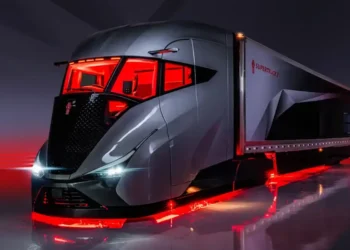
Kenworth Unveils Futuristic Supertruck 2 at Act Expo 2024

Next Post

3D-Printed Home in 5 Days Designed to Survive Earthquakes

Related Posts

Futuristic AI data center using water cooling systems beside a drought-stricken landscape, illustrating the hidden water consumption and environmental impact of AI infrastructure.

Why AI Data Centers Use So Much Water

09/06/2026

Quick Answer Every AI query generates heat. That heat gets removed with water. In 2025, AI data centers used 264...

Aerial interior view of Google's Council Bluffs Iowa data center showing server rows cable trays and blue lighting

Why AI Data Centers Use So Much Electricity?

09/06/2026

Quick answer Global data centers used about 415 terawatt-hours of electricity in 2024, which is roughly 1.5% of all electricity...

Illustration showing human thinking compared with AI, explaining how ChatGPT uses tokens, embeddings, attention, and transformers to predict words instead of thinking like a human.

How Does AI Think? The Science Behind Large Language Models

07/06/2026

Quick Answer How does AI think? It actually doesn’t think the way humans do. Models like ChatGPT and Claude generate...

Samsung's New Solid state EV Battery offers 600-Mile Charge in 9 Minutes and 20-Year Lifespan

Samsung New Solid-State Battery Power 600-Mile EVs in Minutes

25/05/2026

Samsung Moves Closer to EVs with 600-Mile Range and Ultra-Fast Charging I’ve been covering the EV space for years, and...

Why does the Burj Khalifa have that shape — full exterior view of the tower rising 828 meters above the Dubai skyline
Engineering

Why Does the Burj Khalifa Have That Specific Shape?

15/06/2026
Transparent electric car cutaway showing internal EV battery pack with highlighted solid-state battery section, explaining why solid-state batteries are still not in production cars
Transport

Why Solid-State Batteries Are Still Not in Your Car in 2026

13/06/2026
Futuristic AI data center using water cooling systems beside a drought-stricken landscape, illustrating the hidden water consumption and environmental impact of AI infrastructure.
AI

Why AI Data Centers Use So Much Water

09/06/2026
Aerial interior view of Google's Council Bluffs Iowa data center showing server rows cable trays and blue lighting
AI

Why AI Data Centers Use So Much Electricity?

09/06/2026

Subscribe

Yamaha's prototype hydrogen outboard and vessel on show at Miami Boat Show 2024
Transport

Yamaha Unveils Hydrogen-Powered Outboard Motor for Boats

17/05/2026
Lua Planter
Gadgets

This Smart Planter Turns Your Plant into a Pet

24/05/2026
Musashi Humanoid Robot in micro car
Robotics

Meet Musashi Japan’s Future AI Taxi Driver

30/05/2026
Sweden Launches World’s First Self-Sailing Electric Passenger Ferry
Transport

Sweden Launches World’s First Self-Sailing Electric Passenger Ferry

23/05/2026
engineering-junkies-3d-logo

Engineering Junkies

A Publication Led by a Team of Expert Researchers in Technology, Science, and Current Events. Stay Informed by Joining Our Community Today.

Follow Us

Categories

  • Engineering
  • Gadgets
  • News
  • Science
  • Technology
    • AI
    • Robotics
  • Transport
    • Cars

Company

  • About Us
  • Advertise
  • Contact Us
  • Cookie Policy
  • Editorial Guidelines
  • Legal Policies
  • Privacy Policy
  • Terms of Service

© Copyright 2026 -All Rights Reserved by Engineering Junkies.

No Result
View All Result
  • Home
  • News
  • Technology
    • AI
    • Robotics
  • Science
  • Gadgets
  • Transport
    • Cars
  • Engineering

© Copyright 2026 -All Rights Reserved by Engineering Junkies.