Engineering Junkies
  • HOME
  • News
  • Technology
    • AI
    • Robotics
  • Science
  • Gadgets
  • Transport
    • Cars
No Result
View All Result
  • HOME
  • News
  • Technology
    • AI
    • Robotics
  • Science
  • Gadgets
  • Transport
    • Cars
No Result
View All Result
Engineering Junkies
No Result
View All Result
Home Transport

Germany’s Self Driving MONOCAB-OWL To Change Rural Transport Forever

These full-size vehicles run on railway tracks and carry four to six passengers

by Engineering Junkies
01/05/2026
in Transport
A A
Share on FacebookShare on Twitter

Germany MONOCAB OWL Self Driving Railway Cabs Could Transform Rural Mobility

Living in small towns often comes with limited transport options. Missing a bus can mean waiting for hours, and in many rural areas railway stations have been unused for years. This leaves people relying mostly on private cars for everyday travel.

Germany is now testing a new solution called MONOCAB-OWL self driving rail pod, designed to bring life back to old railway lines and improve rural mobility in a simple and modern way.

Instead of large trains running on fixed schedules, this system uses small electric pods that operate only when needed, offering flexible and on-demand travel.
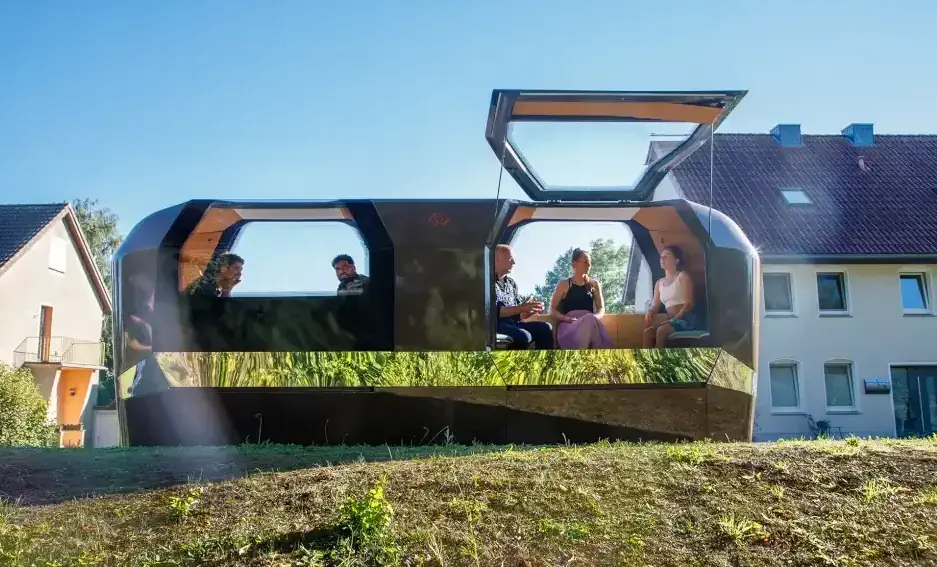
MONOCAB Futuristic Vehicle for Single-Track Railways.webp
Monocab a Futuristic Vehicle for Single-Track Railways

What is MONOCAB-OWL Self Driving Rail Pod

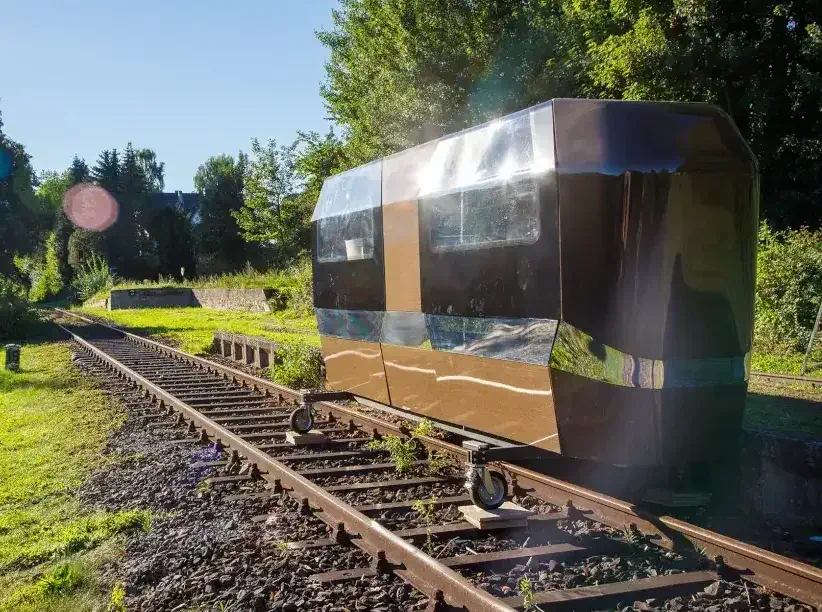
MONOCAB-OWL is an autonomous electric rail vehicle built for old single-track railway lines. It is designed to carry a small group of passengers and travel in both directions on the same rail system safely.

The idea is to replace traditional scheduled transport with a ride-on-demand system, similar to modern ride-sharing apps, but using railway infrastructure instead of roads.

Passengers can book a ride through a mobile application and the pod arrives when requested rather than following a fixed timetable.

The project is being developed in Germany by OWL University of Applied Sciences and Arts, Bielefeld University of Applied Sciences, and Fraunhofer IOSB INA.

The main goal is to reuse existing railway tracks that are no longer in use, instead of building new roads or rail networks.

How MONOCAB-OWL Works

The MONOCAB-OWL self driving rail pod uses a combination of advanced systems to operate safely on a single rail.

A gyroscope system keeps the vehicle balanced much like a spinning top, allowing it to remain stable even during curves, wind, and changes in speed.

Cameras and radar sensors help it detect obstacles on the track, while artificial intelligence manages steering, braking, and navigation. The system also uses 5G connectivity to communicate in real time with other pods and control centers.

If needed, operators in a remote center can monitor or take control of the vehicle.

The Monocab-Owl Makes Traveling in Both Directions Smooth and Easy

MONOCAB OWL Specifications

MONOCAB is a small electric rail pod made to run on old single railway tracks by itself. It can carry up to six passengers. Its body is very narrow, about 120 centimeters wide, so it can safely stay on one rail.

To stay balanced, it uses a gyroscope system that works like a stabilizer. The heavier parts such as the battery, motors, and gyroscope are placed under the cabin. This keeps the center of gravity low and helps the ride stay steady.

For self driving, it uses cameras, radar sensors, and artificial intelligence to see and understand its surroundings. It also stays connected through 5G and can communicate with other pods. A control center can step in if needed.

The system can detect obstacles, manage speed and braking, and coordinate with other vehicles on the track when necessary.

Speed

At the moment, test versions move slowly. This is normal because the project is still in development and safety is the main focus.

A final top speed has not been confirmed yet. Early tests are slow because engineers are still checking how everything works.

The planned speed is around 60 km/h, which is faster than many local buses but still safe for old railway lines.

Battery and Range

Each pod uses a battery of about 27 kWh. It can run for around four hours before needing a recharge. For short rural routes, this is usually enough for daily use.

Design and Comfort

The design is made for simple, comfortable travel. Large windows let in natural light and give wide countryside views. The inside uses wooden materials, making it feel warm and open.

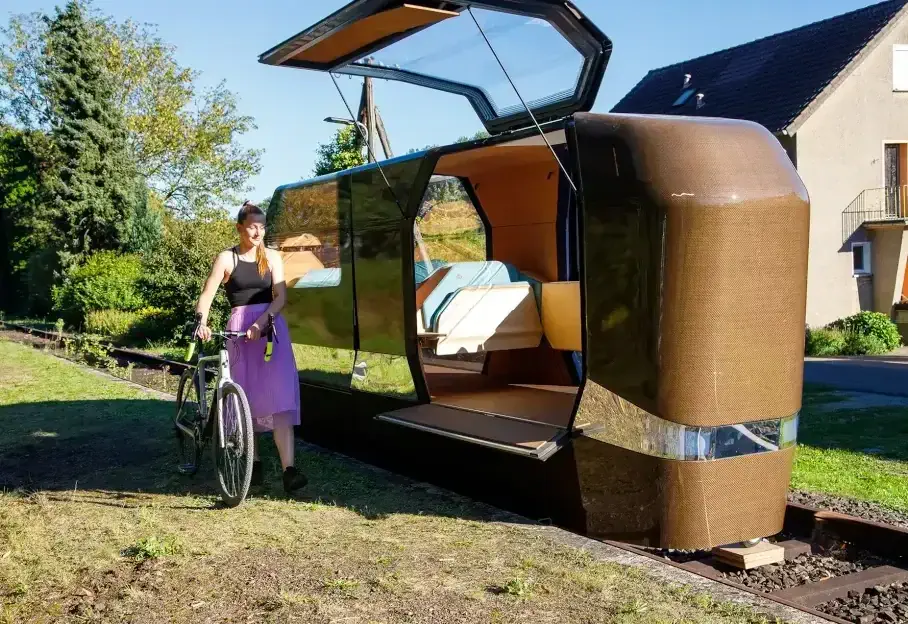
Seats can fold when more space is needed. There is also space for bicycles, scooters, and luggage. Small tables are included for people who want to work on a laptop during the ride.

The doors open upward and a built-in ramp makes entry easy for wheelchair users, parents with strollers, and anyone with limited mobility.

MONOCAB Eco-Friendly Alternative to Traditional Transport

MONOCAB OWL Eco Friendly Transport

One of the main goals of MONOCAB OWL is to cut down pollution in rural travel.

In many small towns people mostly rely on private cars because buses and trains are not always available. This leads to more fuel use, more traffic, and higher carbon emissions over time.

MONOCAB tries to change that. The pods are fully electric and much lighter than normal trains. They carry fewer people and run on existing railway tracks. Because of this they can use less energy, especially on routes where big trains are not needed.

The MONOCAB Can Carry Up to Six Adults Comfortably

Another big benefit is that it does not need new roads or new rail lines. It can use old and unused railway tracks. This can help save money and also reduce damage to the environment from new construction.

It is also much quieter. Since it runs on electric power there is very little noise compared to buses, cars, or diesel trains. This could make travel through villages and rural areas more calm and peaceful.

The idea behind MONOCAB is simple. Give small communities clean and easy transport without changing too much of the land around them.

MONOCAB-OWL Offers Barrier-Free Interior for Wheelchairs and Bicycles

Successful Testing of Early Prototypes:

MONOCAB-OWL is no longer just an idea. Researchers in Germany have already built working versions of the small self driving rail pod and started testing them on real railway tracks.

One major test took place in Bielefeld, Germany, where the vehicle successfully traveled while balancing on a single rail. The tests showed that the pod could move safely and stay stable during the ride.

Right now, the team is mainly focused on making the system safe and reliable. Engineers are testing how the pod handles turns, braking, obstacles, and communication with other vehicles on the track.

Since the project is still in development, the test vehicles currently move at slower speeds while researchers improve the technology.

One of the most interesting parts of the testing is how two MONOCAB pods can pass each other on the same railway line while traveling in opposite directions. The vehicle’s self balancing system makes this possible.

The project is being developed by researchers from several German universities and technology groups. If testing continues successfully, a more advanced version of the MONOCAB could begin operating later this decade.
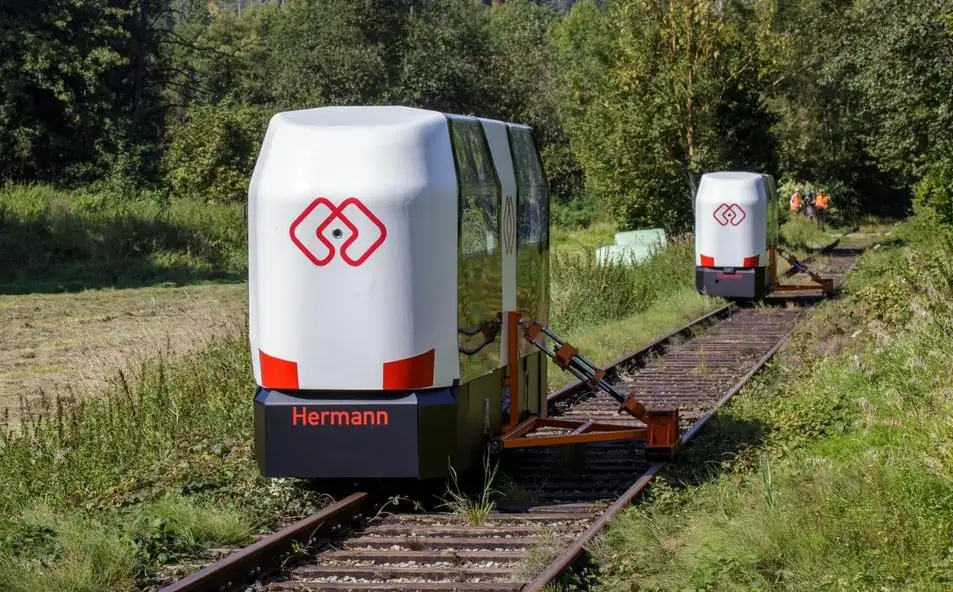
Early MONOCAB-OWL prototypes have passed testing successfully
Early Monocab-Owl Prototypes Have Passed Testing Successfully

Widespread Support for MONOCAB-OWL

The project won the German Mobility Award in 2018 for its creative idea. This shows how it could help with transportation in the future, especially in rural areas.

The MONOCAB-OWL project got money from the European Regional Development Fund (ERDF) and the Ministry for Transport in North-Rhine Westphalia, Germany.
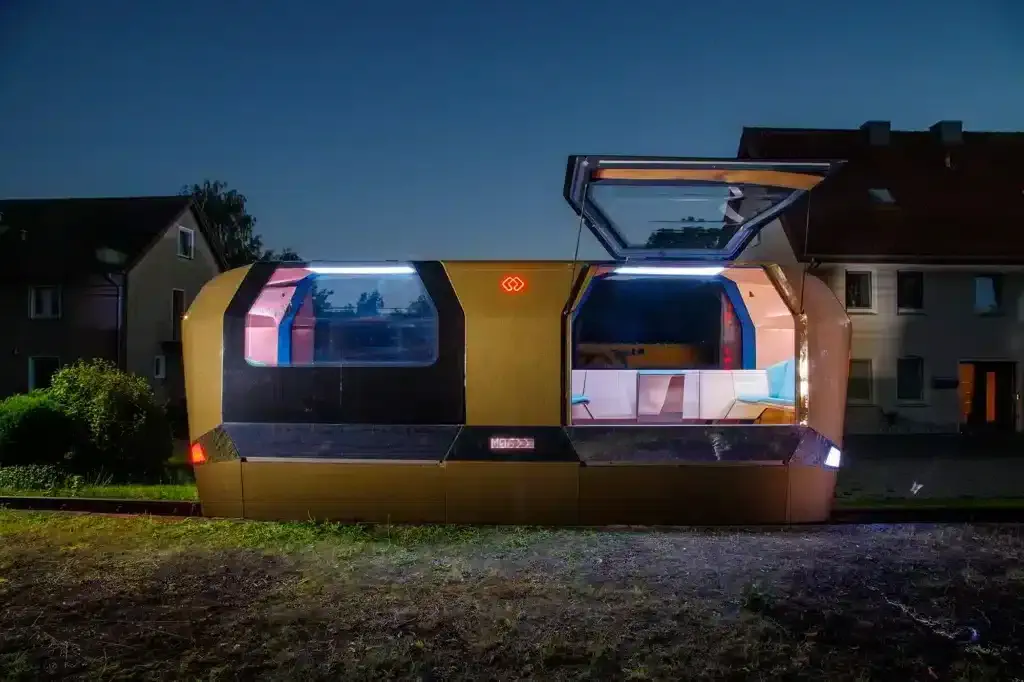
MONOCAB-OWL's Innovative Approach Wins Awards
MONOCAB-OWL’s Innovative Approach Wins Awards

This shows they’re serious about finding new and eco-friendly ways to get around. Plus, lots of groups are helping out too, from local to national levels.

Experimental pods are currently being tested on a small part of a countryside railway in Germany. Försterling predicts that a completed prototype will be in operation by 2028.

Designed for Rural Communities

The MONOCAB pod is designed to feel open and comfortable rather than crowded.

Inside, there is space for wheelchairs, bicycles, scooters, and luggage. Foldable seats can create extra room when needed, and large windows provide wide countryside views during the journey.

The developers say the system is meant for everyone including commuters, students, elderly passengers, tourists, and families.

For many rural residents, the biggest advantage may simply be convenience.

Could MONOCAB Change Rural Travel Around the World

If the project succeeds, MONOCAB-OWL could inspire similar systems in other countries with abandoned railway networks.

Instead of letting old tracks disappear, they could become part of a quieter, cleaner, and more flexible transportation system for rural communities.

For people living far from busy cities, that could mean something very simple but important: the freedom to travel without always needing a car.
Source: MONOCAB
Tags: MONOCABMONOCAB-OWLNewsTransport
Previous Post

PaintCam Eve a Paintball-Firing Security System

Next Post

Kenworth Unveils Futuristic Supertruck 2 at Act Expo 2024

Related Posts

Transparent electric car cutaway showing internal EV battery pack with highlighted solid-state battery section, explaining why solid-state batteries are still not in production cars

Why Solid-State Batteries Are Still Not in Your Car in 2026

13/06/2026

Why Solid-State Batteries Keep Failing: The Real Science Behind the Delays So Where Are All the Solid-State Batteries We Were...

Hydrogen vs electric cars 2026 battery electric car charging next to hydrogen truck refuelling

Hydrogen vs Electric Cars 2026: Which One Is the Future?

13/06/2026

Quick answer Electric cars have already won the everyday car market. The International Energy Agency confirmed over 20 million EVs...

Do electric vehicles catch fire more than gas cars comparison between EV and gasoline vehicle fires

Do Electric Vehicles Catch Fire More Than Gas Cars?

07/06/2026

Do Electric Vehicles Catch Fire More Than Gas Cars? Almost Everyone Gets This Wrong I want to tell you about...

China ultra-high-speed UHS 1000 kmh Maglev Train Successfully Passes Demo Test

China Tests 1,000 km/h Maglev Train Successfully

30/04/2026

China Tests Ultra-Fast Maglev Train Reaching 1,000 km/h China has completed a successful test of its ultra high speed maglev...

Why does the Burj Khalifa have that shape — full exterior view of the tower rising 828 meters above the Dubai skyline
Engineering

Why Does the Burj Khalifa Have That Specific Shape?

15/06/2026
Transparent electric car cutaway showing internal EV battery pack with highlighted solid-state battery section, explaining why solid-state batteries are still not in production cars
Transport

Why Solid-State Batteries Are Still Not in Your Car in 2026

13/06/2026
Futuristic AI data center using water cooling systems beside a drought-stricken landscape, illustrating the hidden water consumption and environmental impact of AI infrastructure.
AI

Why AI Data Centers Use So Much Water

09/06/2026
Aerial interior view of Google's Council Bluffs Iowa data center showing server rows cable trays and blue lighting
AI

Why AI Data Centers Use So Much Electricity?

09/06/2026

Subscribe

Adobe dress project primrose changing patterns
Technology

Adobe Made a Shapeshifting Dress That Changes Its Own Design

22/05/2026
Wazuma V8M
Transport

Wazuma V8M Powered Trike

25/05/2026
Hydrogen vs electric cars 2026 battery electric car charging next to hydrogen truck refuelling
Transport

Hydrogen vs Electric Cars 2026: Which One Is the Future?

13/06/2026
Apple's Long-Rumored Electric Car Project Is Dead
Transport

Why Did Apple End Its Car Project After Spending Billions?

07/05/2026
engineering-junkies-3d-logo

Engineering Junkies

A Publication Led by a Team of Expert Researchers in Technology, Science, and Current Events. Stay Informed by Joining Our Community Today.

Follow Us

Categories

  • Engineering
  • Gadgets
  • News
  • Science
  • Technology
    • AI
    • Robotics
  • Transport
    • Cars

Company

  • About Us
  • Advertise
  • Contact Us
  • Cookie Policy
  • Editorial Guidelines
  • Legal Policies
  • Privacy Policy
  • Terms of Service

© Copyright 2026 -All Rights Reserved by Engineering Junkies.

No Result
View All Result
  • Home
  • News
  • Technology
    • AI
    • Robotics
  • Science
  • Gadgets
  • Transport
    • Cars
  • Engineering

© Copyright 2026 -All Rights Reserved by Engineering Junkies.