Engineering Junkies
  • HOME
  • News
  • Technology
    • AI
    • Robotics
  • Science
  • Gadgets
  • Transport
    • Cars
No Result
View All Result
  • HOME
  • News
  • Technology
    • AI
    • Robotics
  • Science
  • Gadgets
  • Transport
    • Cars
No Result
View All Result
Engineering Junkies
No Result
View All Result
Home Science

AI Runs 10,000 Experiments a Day on Bacteria for Faster Discoveries

by Engineering Junkies
23/05/2026
in Science
A A
Share on FacebookShare on Twitter
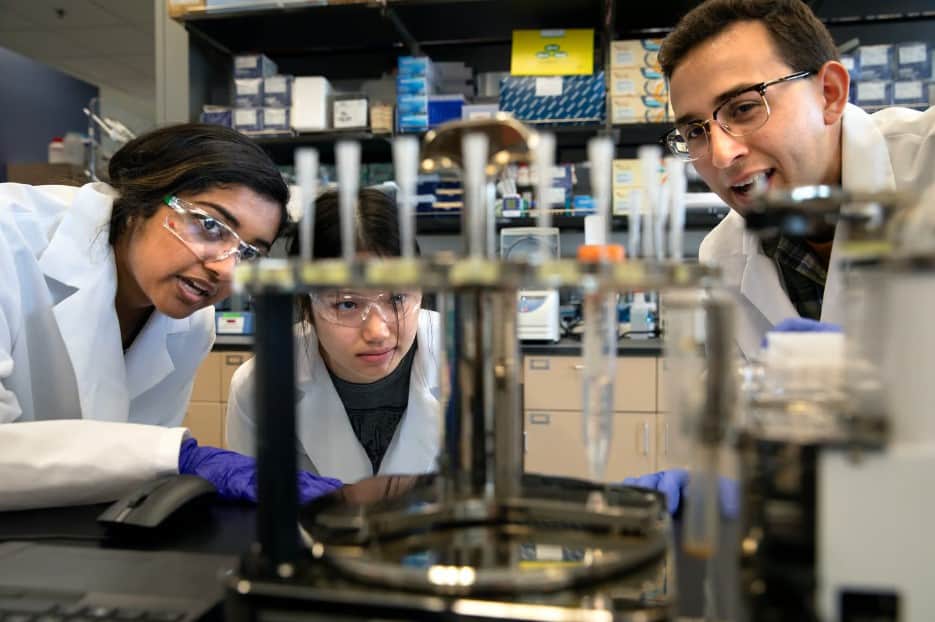
Researchers watch BacterAI at work
BacterAI at work: Marcin Szczepanski, Michigan Engineering

Imagine hiring a scientist who never sleeps never gets tired and runs thousands of experiments every single day. That is exactly what BacterAI does and it could change medicine agriculture and environmental science forever.

Researchers at the University of Michigan built this AI platform to study bacteria entirely on its own. No textbooks. No prior data. It starts from scratch and teaches itself as it goes.

What Is BacterAI?

BacterAI is an artificial intelligence platform that designs its own experiments and hands them off to laboratory robots to run. When the robots finish BacterAI studies the results and decides what to test next. Every single experiment makes it a little smarter.

The findings were published in the journal Nature Microbiology and they are remarkable.

The system can run up to 10,000 experiments per day. That adds up to roughly one million experiments per year. A full team of human scientists would need decades to match that output.
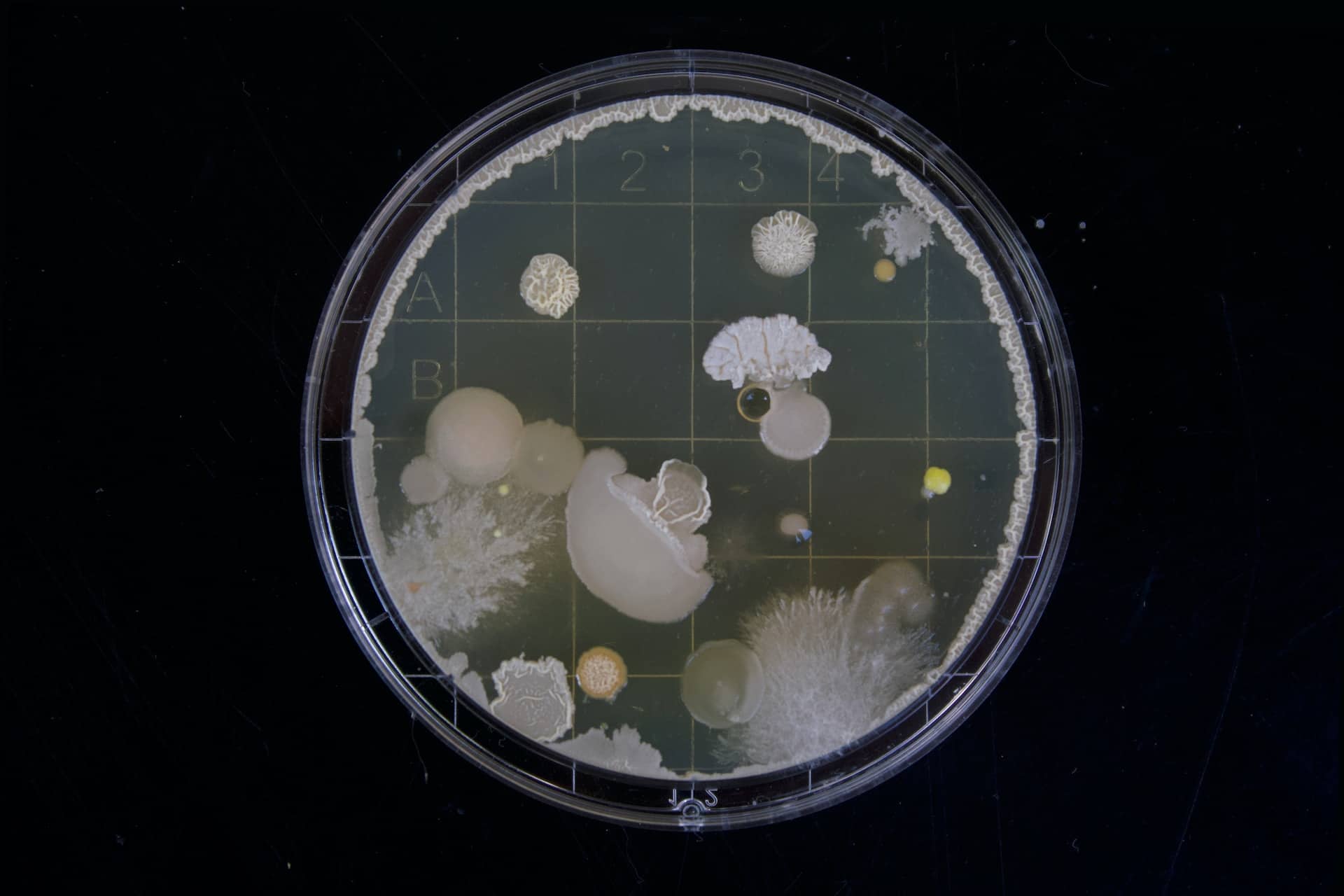
BacterAI
Photo/Unsplash
Why Bacteria Matter More Than You Think

Your body is home to trillions of bacteria. They live on your skin in your gut in your mouth and almost everywhere else inside you. Most of them are not harmful. Many are actually essential. They help you digest food fight off infections and even affect your mood and mental health.

Scientists keep discovering new connections between these tiny organisms and our overall wellbeing. But there is one massive problem standing in the way.

We know almost nothing about most of them.

“We know almost nothing about most of the bacteria that influence our health. Understanding how bacteria grow is the first step toward reengineering our microbiome” said Paul Jensen assistant professor of biomedical engineering at the University of Michigan.

About 90% of all known bacteria have barely been studied at all. Traditional lab methods are simply too slow and too expensive to make a real dent in that number.
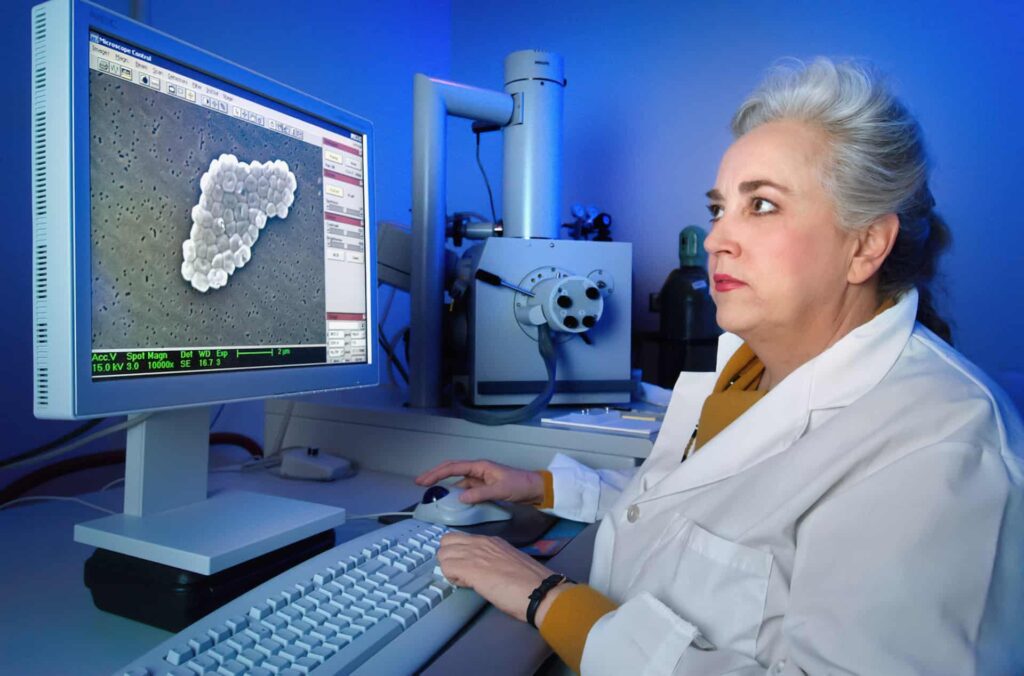
Ai 10,000 Experiments Bacteria
Photo/Unsplash

How BacterAI Actually Works?

Think about how a child learns to walk. They do not read a textbook on balance and movement. They stand up fall down try again and slowly get better. Every stumble teaches them something useful.

BacterAI works exactly the same way.

“When a child learns to walk they don’t just watch adults walk and then say ‘Ok I got it’ stand up and start walking. They fumble around and do some trial and error first. We wanted our AI agent to take steps and fall down to come up with its own ideas and make mistakes. Every day it gets a little better a little smarter” said Jensen.

The AI designs an experiment. Robots run it. The results come back. BacterAI processes what it learned and builds a better experiment for the next round. Over time it turns those lessons into a clear set of rules that human scientists can read understand and build on.

Real World Test Proved It Works

The team put BacterAI to work on two common oral bacteria called Streptococcus gordonii and Streptococcus sanguinis. Both live naturally in your mouth.

The goal was to figure out exactly which amino acids each species needs to grow. Amino acids are the building blocks of proteins and there are 20 of them. The total number of possible combinations from those 20 amino acids runs into the millions.

A traditional human research team would need years to work through those combinations. BacterAI did it in nine days.

Within that time it reached 90% prediction accuracy. It also figured out most of the core feeding rules using fewer than 4,000 experiments which is a fraction of what anyone expected.

What Does This Actually Mean for You?

You probably will never set foot in a research lab. But you will benefit directly from what these labs discover.

Faster bacterial research leads to faster development of new antibiotics which matters enormously as antibiotic resistance becomes a serious global health threat. It leads to better probiotics more effective treatments for gut related conditions and potentially new ways to grow food and remove pollution from our environment.

The microbiome is one of the last truly unexplored frontiers in human biology. For decades we lacked the tools to study it at any meaningful scale. BacterAI and platforms like it are finally changing that.
Tags: BacterAIMedicalmicrobiology
Previous Post

WEPTOS Floating Wave Energy Converter Turns Waves into Electricity

Next Post

Astronomers Discover Earth-Sized Exoplanet with Active Volcanoes

Related Posts

Why Humans Haven’t Returned to the Moon in Over 50 Years

Why Humans Haven’t Returned to the Moon in Over 50 Years?

18/06/2026

On December 14, 1972, astronaut Eugene Cernan climbed the ladder of the Apollo 17 lunar module and left the Moon....

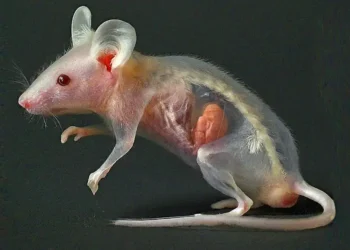
FD&C Yellow 5 (tartrazine), the dye that gives foods, drugs, and cosmetics a lemon-yellow color, can also be used to make mice transparent, as shown in this generative image.

Scientists Make Mouse Skin Transparent Using Common Food Dye

07/06/2026

FD&C Yellow 5 (tartrazine), the dye that gives foods, drugs, and cosmetics a lemon-yellow color, can also be used to...

Scientists are exploring how Toxoplasma gondii, a parasite in cat feces, might help treat Alzheimer's and Parkinson's

Parasites Found in Cat Poop Could Cure Alzheimer’s and Parkinson’s

07/06/2026

Scientists are exploring how Toxoplasma gondii, a parasite in cat feces, might help treat Alzheimer's and Parkinson's A parasite commonly...

UK Developing Worlds First Lung Cancer Vaccine LungVax

UK Developing LungVax World’s First Lung Cancer Vaccine

25/05/2026

LungVax Could Become the World’s First Vaccine to Help Prevent Lung Cancer Scientists in the UK are working on a...

Side by side comparison of a standard 15 kW server rack and an AI GPU rack drawing over 100 kW inside a modern data center
AI

How Much Power Does a Data Center Use? How Engineers Calculate It

22/06/2026
Why does the Burj Khalifa have that shape — full exterior view of the tower rising 828 meters above the Dubai skyline
Engineering

Why Does the Burj Khalifa Have That Specific Shape?

19/06/2026
Transparent electric car cutaway showing internal EV battery pack with highlighted solid-state battery section, explaining why solid-state batteries are still not in production cars
Transport

Why Solid-State Batteries Are Still Not in Your Car in 2026

19/06/2026
Futuristic AI data center using water cooling systems beside a drought-stricken landscape, illustrating the hidden water consumption and environmental impact of AI infrastructure.
AI

Why AI Data Centers Use So Much Water

19/06/2026

Subscribe

Skyryse One Helicopter with Just One Stick and Two Screens
Transport

Skyryse Unveils a Helicopter with Just One Stick and Two Screens

25/05/2026
Amazon Zoox
Transport

Amazon Self-Driving Taxi Zoox on Public Roads in California

24/05/2026
Salistick preganancy sliva test
Science

Salistick The World’s First Saliva Pregnancy Test

23/05/2026
Illustration showing human thinking compared with AI, explaining how ChatGPT uses tokens, embeddings, attention, and transformers to predict words instead of thinking like a human.
AI

How Does AI Think? The Science Behind Large Language Models

19/06/2026
engineering-junkies-3d-logo

Engineering Junkies

A Publication Led by a Team of Expert Researchers in Technology, Science, and Current Events. Stay Informed by Joining Our Community Today.

Follow Us

Categories

  • Engineering
  • Gadgets
  • News
  • Science
  • Technology
    • AI
    • Robotics
  • Transport
    • Cars

Company

  • About Us
  • Advertise
  • Contact Us
  • Cookie Policy
  • Editorial Guidelines
  • Legal Policies
  • Privacy Policy
  • Terms of Service

© Copyright 2026 -All Rights Reserved by Engineering Junkies.

No Result
View All Result
  • Home
  • News
  • Technology
    • AI
    • Robotics
  • Science
  • Gadgets
  • Transport
    • Cars
  • Engineering

© Copyright 2026 -All Rights Reserved by Engineering Junkies.