The ocean never stops moving. Day and night, waves roll across the sea carrying enormous amounts of energy. Most of it goes to waste. A Danish company called WEPTOS wants to change that.
WEPTOS has built a floating machine that sits in the ocean and turns wave energy into electricity. It is one of the most talked about wave energy technologies in the world right now and it is closer to real use than most people think.
What Is WEPTOS?
WEPTOS stands for Wave Energy Power Take-Off System. It is both the name of the technology and the company behind it. The company was founded in 2007 by designer and engineer Tommy Larsen and is based in Fredericia, Denmark.
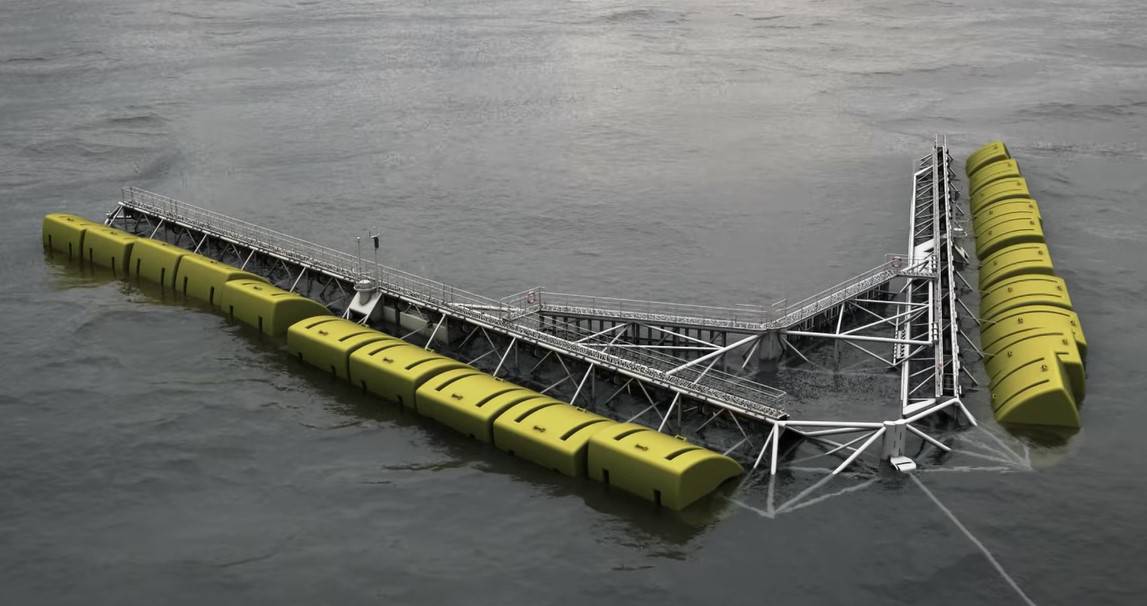
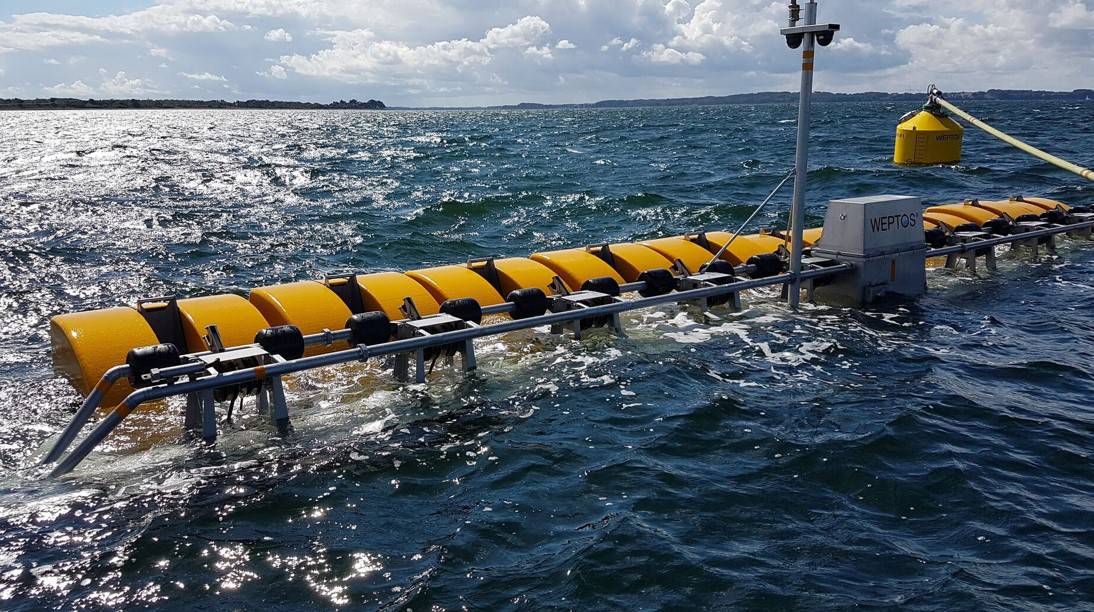
The WEPTOS Wave Energy Converter or WEC is a floating structure shaped like the letter V. It sits on the water and collects energy from waves as they pass through it. The energy is then converted into electricity through a generator.
What makes WEPTOS different from most wave energy ideas is that it actually works. It has been tested at real scale, backed by serious funding and is now moving toward its first commercial deployment.
How the WEPTOS Wave Energy Converter Works?
The WEPTOS WEC looks unusual. It is a large V-shaped floating structure anchored in the sea. That shape is not just for looks. It is the key to how the machine captures energy and survives rough weather.
The V-Shape Does the Heavy Lifting
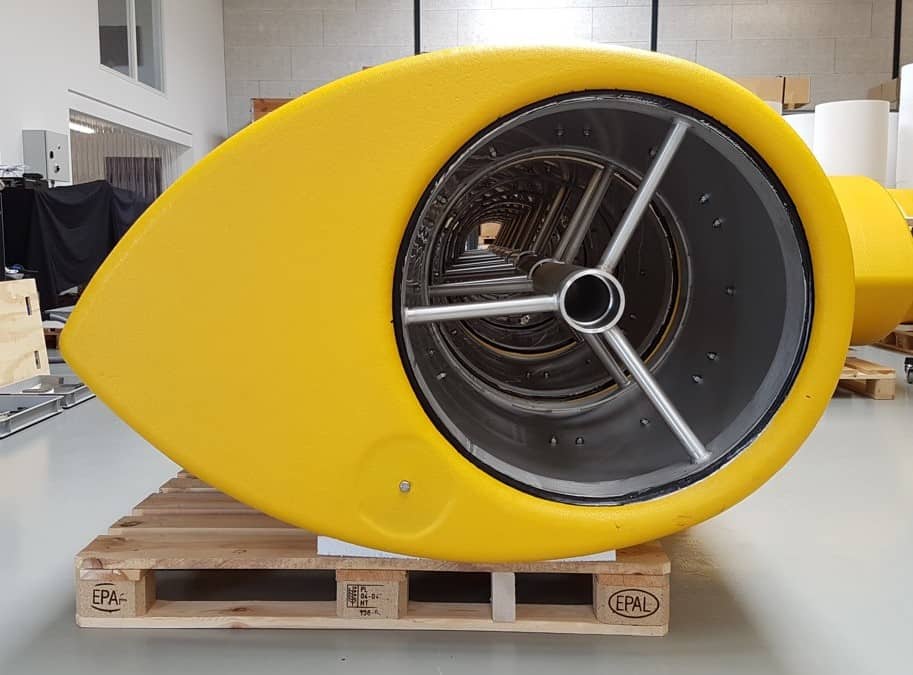
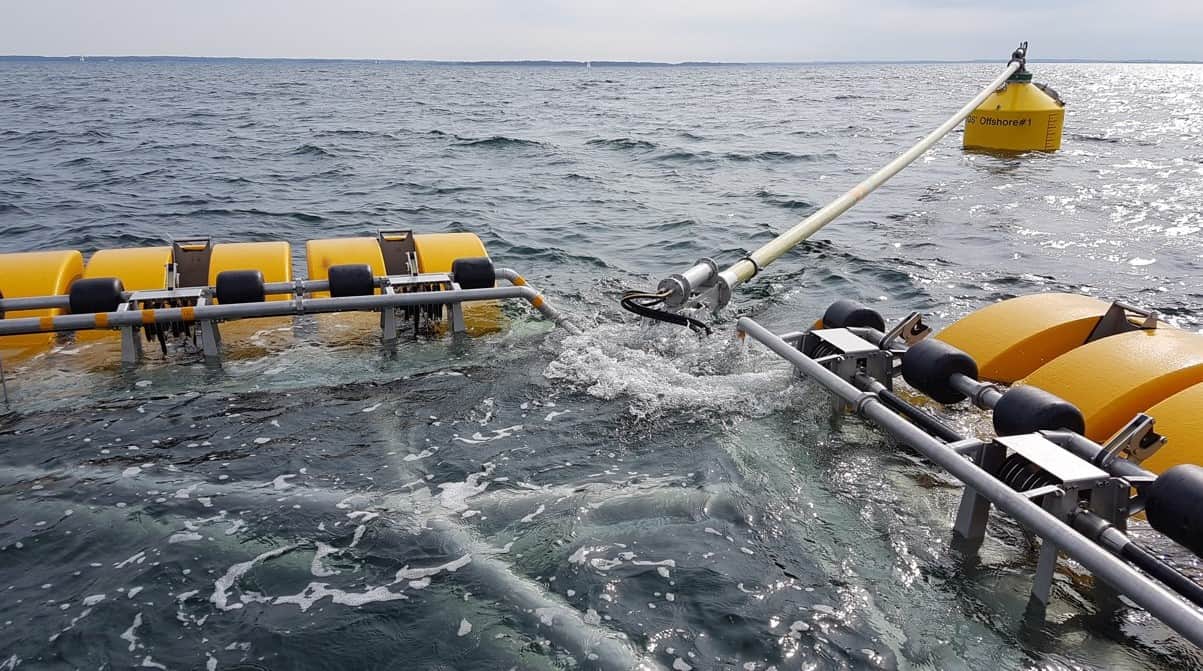
The two arms of the V each hold a series of rotors. These rotors sit along the arms at an angle to the direction of the waves. When a wave passes through the structure it pushes against the rotors and makes them turn.
Each rotor transfers that turning motion to a shared central axle. The axle then drives a generator and the generator produces electricity. The whole process is mechanical which means it is reliable and does not need complicated electronics or hydraulics to work.
The Rotor Design Comes From a 1970s Discovery
The rotors are not a random design. They are based on something called the Salter’s Duck a wave energy device invented in 1974 by professor Stephen Salter at the University of Edinburgh. The Salter’s Duck geometry became well known in 1974 for its ability to achieve high levels of energy conversion efficiency.
WEPTOS took that proven design and made it better. The modifications to the WEPTOS version of the Salter’s Duck rotor have reduced the construction weight significantly while still maintaining the same high efficiency.
Lighter rotors mean lower costs and easier installation without giving up any performance.
It Works Both Ways
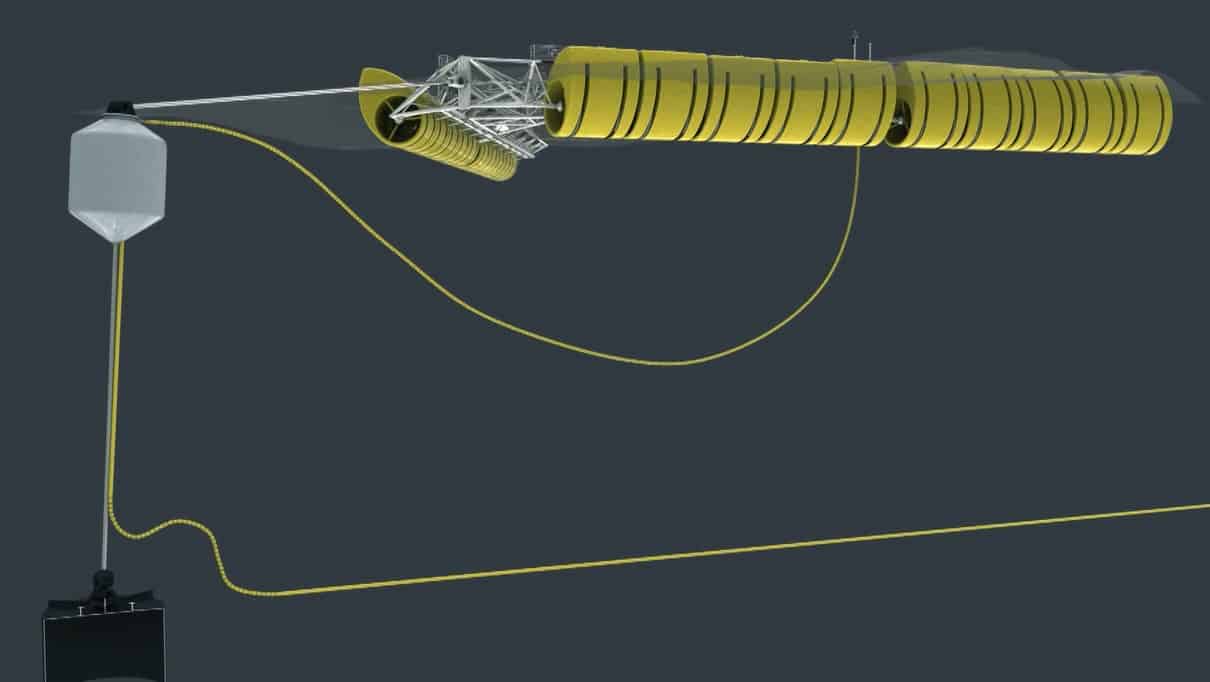
Most wave energy devices only capture energy when a wave pushes forward. WEPTOS captures energy in both directions. When a wave hits an individual rotor the mechanics of the joint axle causes it to rotate.
After the wave passes the center of gravity makes the rotor swing back towards the starting point and that return swing also contributes to rotating the central axle.
This two-way energy capture is one reason WEPTOS is more efficient than many competing designs.
How WEPTOS Handles Storms?
Surviving rough seas is one of the biggest challenges for any ocean machine. WEPTOS solves this in a clever way.
The WEPTOS WEC structure angle determines its exposure to the waves. During calm conditions waves are small and the device can widen to capture more wave power. During rough conditions a more concentrated width is beneficial to ensure optimal energy extraction and prevent overloading the generator.
The WEPTOS technology automatically adapts the structure angle to changing wave conditions to optimize power to the generator.
Think of it like adjusting the sails on a boat. In light wind you open them wide. In a storm you pull them in. WEPTOS does the same thing but automatically and with ocean waves instead of wind.
This self-adjusting design protects the machine during extreme weather while keeping it generating electricity in normal conditions.
The Power Take-Off System
One of the most important parts of the WEPTOS machine is a component called the Power Take-Off or PTO system. This is the mechanism that transfers energy from the rotors to the generator.
The PTO system is a new invention designed and patented by WEPTOS. It is a breakthrough in mechanical extraction of wave energy. Performance is proven through extensive testing and it is the key to utilizing already known generator technology from wind turbines.
That last point matters a lot. Instead of designing expensive custom generators WEPTOS can use standard generator technology that already exists in wind turbines. This keeps manufacturing costs down and makes maintenance much simpler because technicians already know how to work on that equipment.
Source: WEPTOS A/S