
A Tiny Wooden Box That Could Change Everything
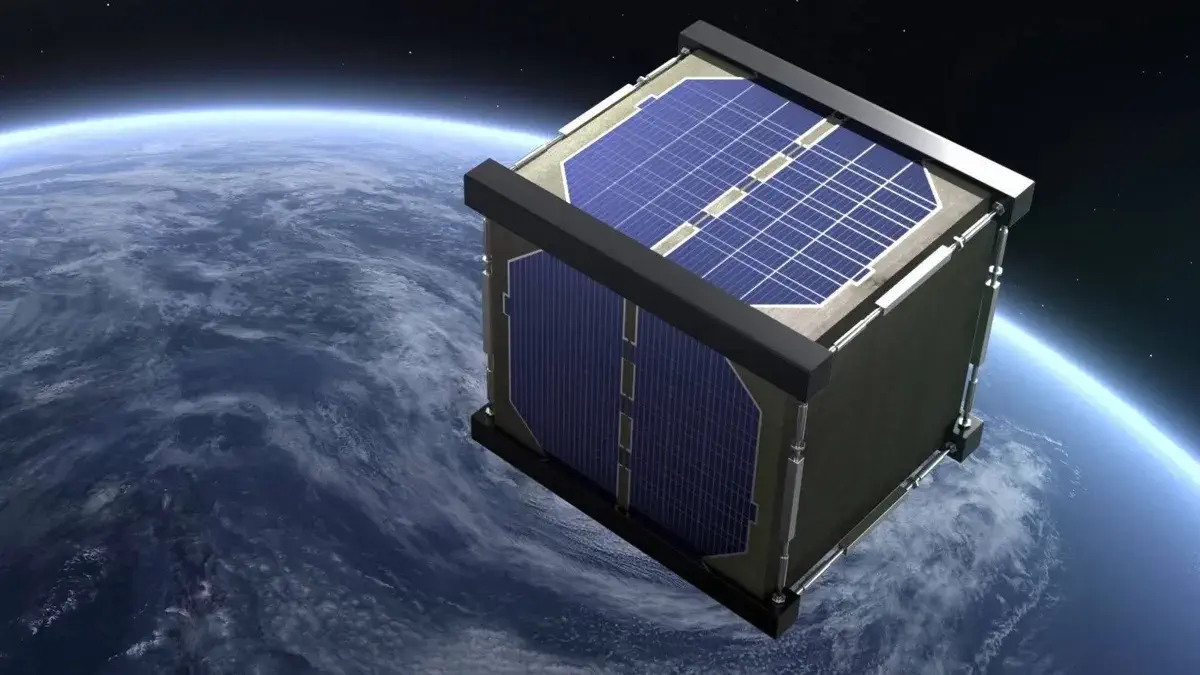
LignoSat is the world’s first wooden satellite. It measures just 10 centimeters on each side, roughly the size of a coffee mug, and weighs 900 grams.
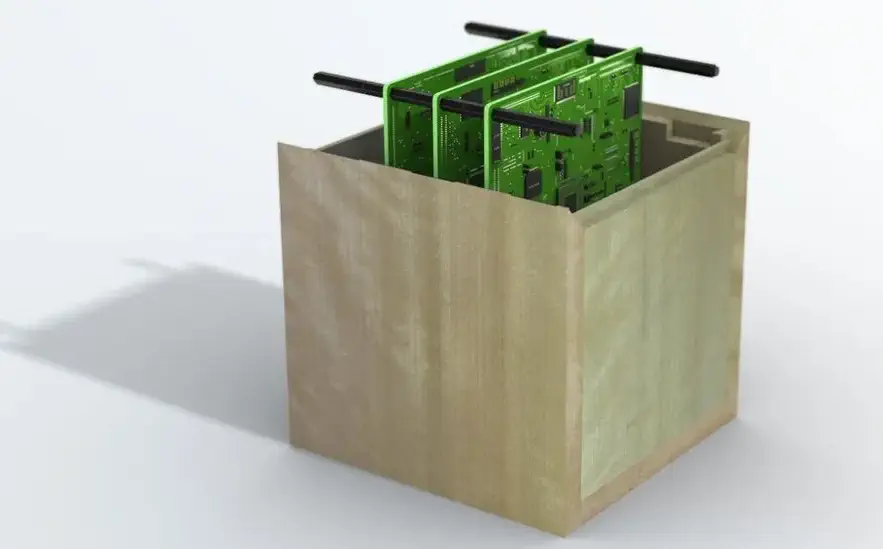
It looks nothing like what people picture when they imagine a spacecraft. No gleaming metal panels. No dramatic solar arrays. Just a small wooden cube with solar panels on the outside and electronics tucked inside.
The satellite was developed by researchers at Kyoto University together with Sumitomo Forestry, one of Japan’s oldest logging companies. The collaboration sounds unusual but it was entirely deliberate.
The scientists wanted forestry expertise at the table from day one because choosing the right wood was just as critical as any engineering decision they would make.
The name LignoSat comes from “ligno” the Latin word for wood and also references lignin, the organic polymer that gives wood its structural strength.
Why make a satellite out of wood?
It sounds strange at first, but there’s a real environmental reason behind it.
When a normal satellite reaches the end of its life it falls back into Earth atmosphere and burns up. That sounds clean but most satellites are made of aluminum and aluminum does not simply disappear when it burns. It turns into aluminum oxide particles that stay in the upper atmosphere for decades
A 2024 study in Geophysical Research Letters found that satellites reentering in 2022 alone raised aluminum levels in the atmosphere by 29.5% above natural levels, releasing around 17 metric tons of aluminum oxides into the mesosphere.
These particles can take up to 30 years to reach the stratosphere where they trigger chemical reactions that eat away at the ozone layer.
The problem gets worse from here. Researchers estimate that planned satellite megaconstellations could push that figure to 360 metric tons of aluminum oxides every single year. That is 646% above natural levels.
Wood changes this entirely. A wooden satellite burns up and leaves nothing but biodegradable ash. No metal particles. No atmospheric damage.
Why Magnolia Wood Was Chosen?
The team did not simply grab a plank from a lumber yard and launch it into orbit. The selection process was serious and took years.
In April 2020 Kyoto University and Sumitomo Forestry launched the LignoStella Space Wood Project. Two years later they sent three different wood species to the International Space Station’s Kibo module where the samples spent ten months exposed to real space conditions before returning to Earth in early 2023.

Magnolia wood from Japan’s native honoki tree came out on top. It showed the least cracking under extreme temperature swings and impressed researchers with its workability, dimensional stability and overall strength.
Wood also has a practical advantage most people do not expect. It does not block radio waves. That means antennas and communication gear can sit inside the satellite body rather than on the outside which makes the whole design simpler and stronger.
Professor Koji Murata from Kyoto University put it simply. “Wood is more durable in space because there’s no water or oxygen to cause it to rot or ignite.” He also noted that early aircraft in the 1900s were built from wood and that a wooden satellite is no different in principle.
How LignoSat Was Built
LignoSat was put together without a single screw, nail or drop of glue.
Its honoki wood panels were joined using a traditional Japanese technique called the Blind Miter Dovetail Joint, the same method used to build temples and shrines in Japan for over a thousand years. The fact that it now holds a satellite together in orbit says something about how well that technique has aged.

The satellite itself is a 1U CubeSat, the smallest standard size in the industry. Inside it carries sensors that measure strain on the wood, monitor temperature, track radiation exposure and test whether Earth’s geomagnetic field interferes with the electronics.
Launch, Deployment and What Actually Happened
On November 5, 2024 LignoSat arrived at the International Space Station aboard a SpaceX Dragon capsule from Cape Canaveral. JAXA deployed it into orbit from the Kibo module on December 9, 2024 alongside four other experimental CubeSats.
Then things did not go as planned.
Scientists in Kyoto lost communication with the satellite shortly after deployment. Three switches needed to activate the system and deploy the antenna had failed, leaving the team unable to collect any of the data they had set out to gather.
But the satellite did not fail. US Department of Defense tracking confirmed LignoSat stayed in one piece for all 116 days it spent in orbit. That was the most important thing it needed to prove and it proved it.
Professor Takao Doi, the former Japanese astronaut who co-developed LignoSat, identified two genuine wins from the mission. The wooden structure held up in space. And the ISS safety review for a wooden spacecraft was completed for the first time, making the path faster and simpler for every wooden satellite that comes after it.
What Comes Next: LignoSat-2
The team learned from what went wrong and they are already building the next one.
LignoSat-2 will be twice the size of the original and this time it will have two antennas instead of one. One sits inside the wooden body as before and a second is mounted on the outside as a backup.
If one fails the other keeps talking to the ground. It is a simple fix for the problem that cost them 116 days of data and the team expects to launch it in 2028.
The wider scientific community is paying attention too. Raphaela Günther, an aerospace engineering PhD student at Technische Universität Dresden with no ties to the project, called the Kyoto University team’s work a “small breakthrough” in renewable space materials research.
Coming from someone outside the project that means something.
Wooden Satellites: The Bigger Picture
More than 10,000 satellites currently orbit Earth and thousands more are being launched every year.
Every single one of them built from conventional aluminum will eventually burn up and add more nanoparticles to an atmosphere that is already carrying 29.5% more aluminum than it naturally should. That number keeps climbing and no one is really talking about it.

Wood could change that conversation. And scientists are starting to think much bigger than satellites. Koji Murata has floated the idea of building wooden domes on Mars where timber forests could be grown as part of long term plans for sustainable human life in space.
Professor Doi puts it even more simply. He wants to plant a tree on the Moon. It sounds like something from a poem but his reasoning is completely practical.
“If we can use wood in space,” he said, “we might be able to have sustainable space development forever.”
Source: Kyoto University, NASA