A Sticker That Could Save Your Life
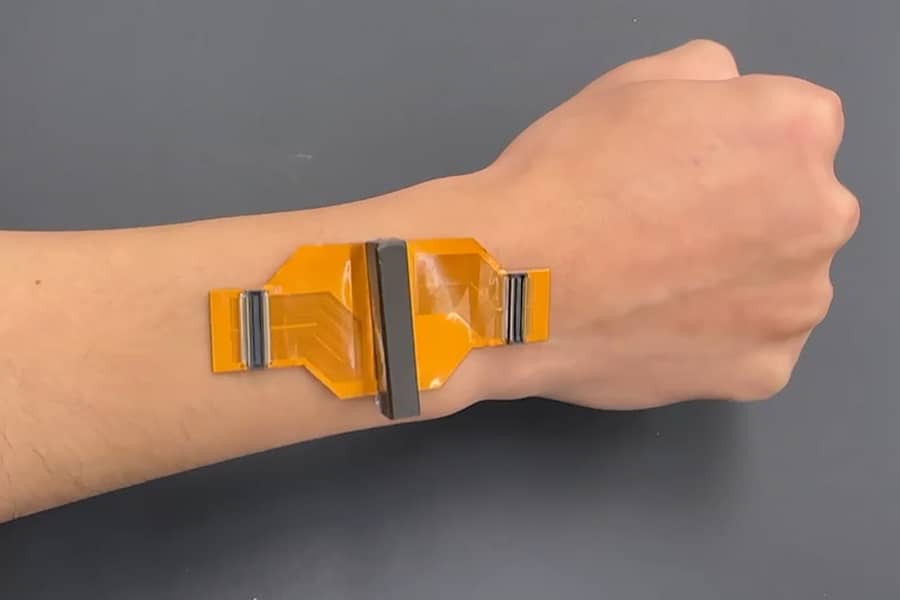
MIT engineers have built something that sounds almost too simple to be real. A small sticker the size of a postage stamp that you wear on your skin and it watches your internal organs around the clock for early signs of disease.
No needles. No hospital machines. No need for a technician to hold a probe against your body. Just a sticker quietly doing the work of a full ultrasound machine from the outside of your skin.
The research was published in February 2024 in the journal Science Advances and it is a collaboration between engineers at MIT and the University of Southern California.
How Does a Sticker Monitor Your Organs?
The sticker works by sending sound waves through your skin and into your body. Those waves bounce off your internal organs and come back to the sticker. The sticker then reads the pattern of those returning waves to measure how stiff your organ is.
This technique is called shear wave elastography. Think of it like pressing your finger into a water balloon versus a soccer ball. The stiffer the organ the faster the sound wave bounces back. That speed tells the sticker how healthy or unhealthy the organ is.
The reason stiffness matters is simple. When organs get sick they tend to harden over time. A liver going into failure gets stiffer. A tumor growing in tissue makes the surrounding area stiffer. Catching that change early is the difference between treating a problem and missing it until it is too late.
Professor Xuanhe Zhao of MIT’s mechanical engineering department and senior author of the study explained it in the clearest way possible. A healthy liver is about as wobbly as a soft-boiled egg. A diseased liver becomes more like a hard-boiled egg.
This sticker can pick up on those differences deep inside the body and send an alert when organ failure is developing.
What Is Actually Inside the Sticker?
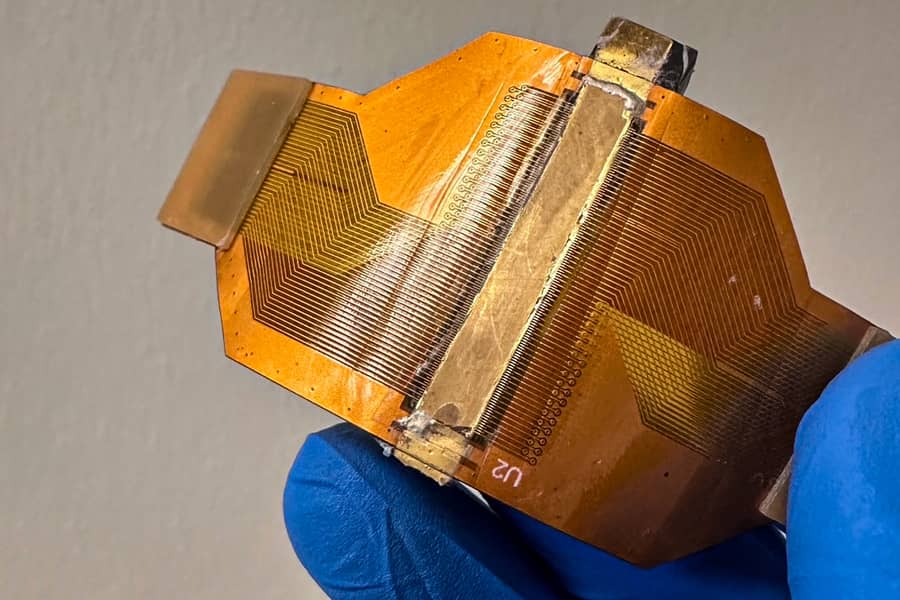
The sticker packs 128 tiny sound-producing components called piezoelectric transducers onto a chip that is just 25 millimeters square. That is roughly the size of your thumbnail. Each transducer converts an electric signal into a sound wave and sends it into the body.
The underside of the chip is coated in a sticky hydrogel which is a soft material made of water and polymer. This gel bonds gently to your skin and allows sound waves to travel in and out of the sticker with almost no signal loss.
Existing hospital ultrasound probes also use 128 transducers but they are large handheld devices that require a trained technician to operate. The MIT team shrank all of that into something you can peel and stick onto your body.
It is worth knowing this is not the first ultrasound sticker MIT has built. In 2022 the same team released an earlier version focused on imaging organs in real time. That sticker could produce live pictures of the heart lungs and stomach.
This 2024 version goes a step further. Instead of just showing what an organ looks like it measures how stiff the organ is which is a direct and early indicator of disease.
What It Found in Early Tests
The team tested the sticker on rats with induced acute liver failure over 48 hours of continuous monitoring. The sticker detected clear signs of liver stiffening within the first 6 hours of the disease developing. Those findings were later confirmed by tissue samples taken from the same animals.
That 6-hour window matters more than it might seem. Between 2000 and 4000 people in the United States develop acute liver failure every year. In many of those cases the condition moves fast and the window to intervene is narrow.
Catching the warning signs within 6 hours rather than waiting for a technician to run a check could be the difference between saving an organ and losing one.
Lead author Hsiao-Chuan Liu described the vision simply. Just after a liver or kidney transplant doctors could stick this on a patient and watch how the stiffness of the organ changes over days.
If there is any early sign of failure they can act immediately instead of waiting until the condition becomes severe.
The sticker’s sensitivity matched that of commercial handheld ultrasound probes which are the current gold standard for this type of monitoring.
Where This Could Be Used First
The first target is intensive care units. Patients recovering from organ transplants need their new organs watched closely in the days after surgery.
A sticker that monitors stiffness around the clock without requiring a technician to keep checking in would make that process safer and more reliable.
Beyond the ICU the team is working toward a portable version that patients could use at home. That would open up long-term monitoring for conditions like liver disease progression or the growth of solid tumors without requiring repeated hospital visits.
Professor Zhao has pointed toward an even bigger picture. In the future people could wear a few of these stickers on different parts of the body to monitor several organs at once and track their overall health continuously.
Why This Is Different From What Exists Today
Current ultrasound elastography requires a trained technician a large machine and a patient who can stay still while the probe is held against their body. It gives doctors a snapshot not a continuous picture. If something changes between checks it can go completely unnoticed.
This sticker changes that. It stays on the body and never stops watching. It does not need anyone to operate it. It is small enough that a patient can wear it while moving around. And it is the first wearable device confirmed to perform continuous ultrasound shear wave elastography in living organs.
Written by
Engineering Junkies Team
We are a team of engineers, researchers and technology writers who love breaking down complex topics into clear and honest content. Every article we publish is built on real research and honest writing.
You can reach us through our Contact Us page.