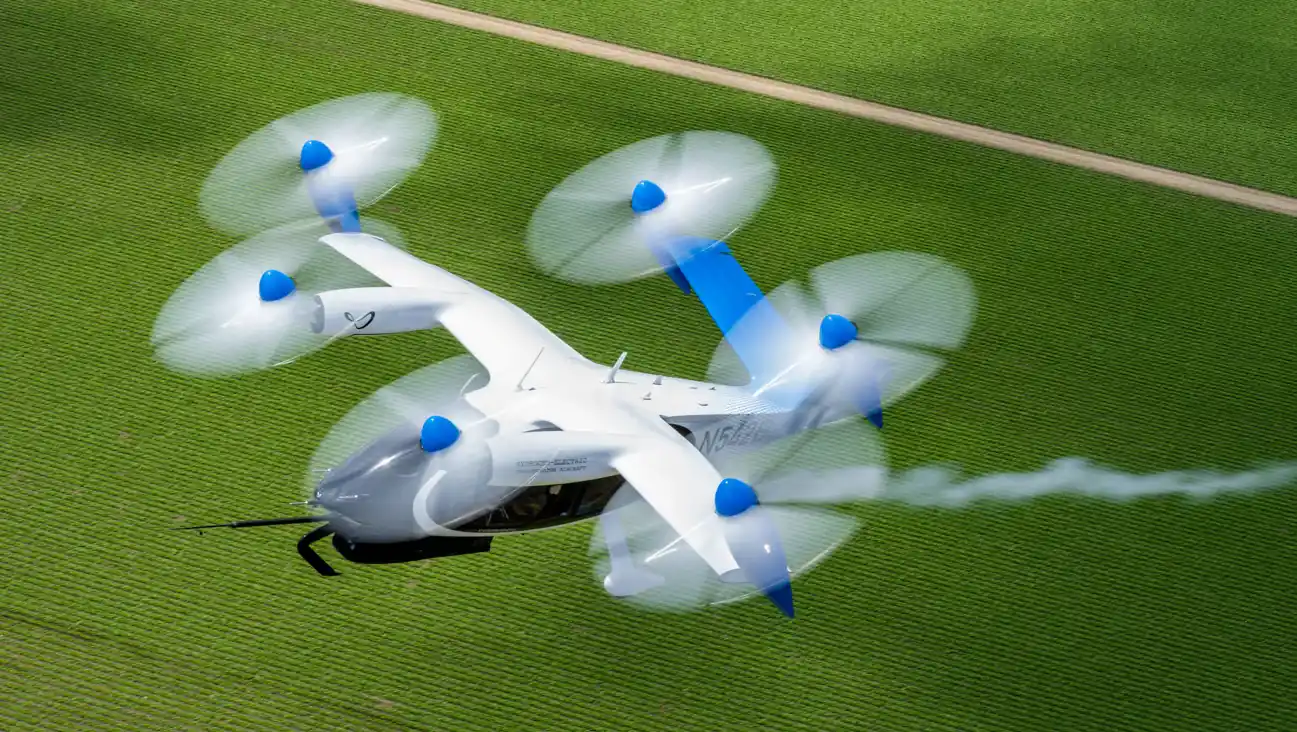
The company says hydrogen could become a cleaner alternative to traditional jet fuel for mid range travel helping reduce aviation’s carbon footprint.
Built on its earlier battery electric air taxi program the aircraft is designed for vertical takeoff and landing meaning it does not need a runway. This makes it especially useful for short regional trips in cities and remote areas.
In September 2023 Joby’s H2FLY team also set a record by completing the first piloted flight of a liquid hydrogen electric aircraft using fuel cell technology further showing the potential of hydrogen powered aviation.

Hydrogen-Powered Electric Propulsion
As part of its new technology program Joby and its subsidiary H2FLY in Stuttgart Germany developed a hydrogen electric demonstrator.
Before the conversion the aircraft completed more than 25000 miles of battery electric testing at Joby’s facility in Marina California.
Based on Joby’s main battery electric aircraft this demonstrator uses a liquid hydrogen fuel tank and fewer batteries while keeping the same airframe and design H2FLY built a fuel cell system that converts hydrogen into electricity while producing heat and water as by products.

The Future of Eco-Friendly Aviation
Net zero targets are pushing aviation and other industries to adopt cleaner low carbon solutions. Companies like Joby Aviation are at the forefront of this shift with battery electric and hydrogen fuel cell air taxis designed to make urban travel more practical and sustainable.
Much of the design testing and certification work already completed on Joby’s battery electric aircraft also applies to its hydrogen electric version which helps speed up development.

The company also plans to use the same landing pads operations teams and its ElevateOS software for both battery electric and hydrogen electric aircraft keeping the system unified and efficient.
Joby says its recent flight marks the first forward flight of a liquid hydrogen powered VTOL aircraft setting a new milestone in aviation history.
They also believe liquid hydrogen could significantly extend flight range with future aircraft such as the H2FLY HY4 expected to reach over 900 miles or about 1500 kilometers.
Why It Matters?
The aviation industry is under growing pressure to cut emissions, and hydrogen is being explored as one of several possible solutions alongside battery-electric systems.
Joby says much of its existing engineering and testing work for battery-electric aircraft also applies to hydrogen systems.
The company is also aiming to keep operations consistent by using shared infrastructure such as landing sites, ground teams, and its ElevateOS software platform across both types of aircraft.